
Quick answer
Choose a punch hole that is at least 0.75 times the material thickness for aluminum, 1 time for mild steel, and 2 times for stainless steel. Then size it to the fastener or part it must fit, confirm the punch-to-die clearance, keep holes at least two material thicknesses apart and away from the edge, and make sure your machine has enough tonnage for the hole.
Quick summary
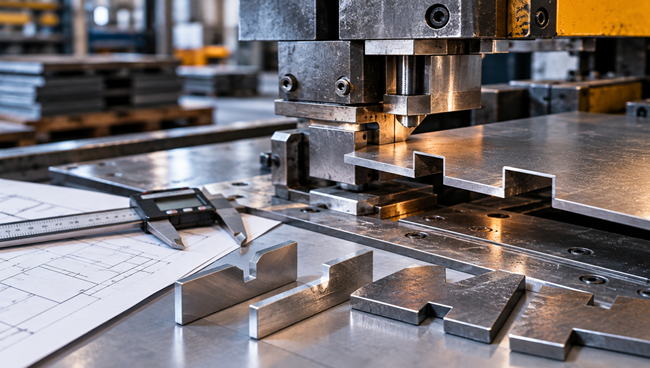
When punching sheet metal, you need to choose the punch size that best fits your needs. Punch holes for fasteners, assembly, wiring, or aesthetics, and the purpose determines the best hole size.
However, choosing the correct sheet metal punch hole size involves more than selecting a punch that matches the desired opening. The choice depends upon the material thickness, metal type, hole location, tooling clearance, and machine capacity. This blog has discussed it in detail.
The key highlights of the blog are:
- Hole diameter should generally match material thickness and metal type.
- Mild steel, aluminum, and stainless steel have different minimum punch-size guidelines.
- Proper punch-to-die clearance helps produce cleaner holes and extends tool life.
- Hole spacing and distance from sheet edges can affect distortion and accuracy.
- Equipment selection matters, especially with thick or high-strength materials.
- Professional punching services can help determine practical hole sizes for specific metal and thickness requirements.
Introduction
If you are punching a hole in a metal sheet, you need the right tooling and punch size to create the desired shape. It’s not as simple as matching the punch to the desired size, because several important factors affect your choice.
Whether you need metal punching for a DIY or work project, this blog will help you choose the right sheet metal hole punch size by explaining the factors that affect the decision.
Read on!
Why Does Sheet Metal Punch Hole Size Matter?
A sheet metal punch hole must be large enough for the selected tooling and appropriate for the material’s thickness and strength. If you choose a punch that’s too small, it will apply excessive force and increase the risk of wear, tool damage, distorted holes, and rough edges.
How to Choose the Right Hole Diameter?
First, identify the material and its thickness. Every metal is different, so what works for stainless steel might not work for aluminum, and what works for aluminum might not work for carbon steel.
The ratios for the material and size are:
| Material | General minimum punch-to-thickness ratio |
|---|---|
| Aluminum | 0.75:1 |
| Mild steel | 1:1 |
| Stainless steel | 2:1 |
These ratios are guidelines, but they vary by tooling, equipment, material grade, and application.
Here is how those ratios work out for common material thicknesses:
| Material thickness | Aluminum (0.75:1) | Mild steel (1:1) | Stainless steel (2:1) |
|---|---|---|---|
| 1/8″ (0.125″) | 0.094″ (about 3/32″) | 0.125″ (1/8″) | 0.250″ (1/4″) |
| 3/16″ (0.188″) | 0.141″ (about 9/64″) | 0.188″ (3/16″) | 0.375″ (3/8″) |
| 1/4″ (0.250″) | 0.188″ (3/16″) | 0.250″ (1/4″) | 0.500″ (1/2″) |
| 3/8″ (0.375″) | 0.281″ (about 9/32″) | 0.375″ (3/8″) | 0.750″ (3/4″) |
| 1/2″ (0.500″) | 0.375″ (3/8″) | 0.500″ (1/2″) | 1.000″ (1″) |
The purpose of metal punching defines the punch size. Whether the hole will accommodate a pin, bolt, wire, fastener, or other component, choose a specific diameter rather than choosing the nearest available punch. It’s crucial for precision applications.
Factors To Consider When Choosing A Sheet Metal Hole Punch
Here is what you should consider before deciding upon a punch size:
Consider Punch and Die Clearance
Punch size is only one part of the equation. The die opening should be larger than the punch so it can shear the metal and push it through the die smoothly without getting stuck. The appropriate clearance depends upon the material and its thickness.
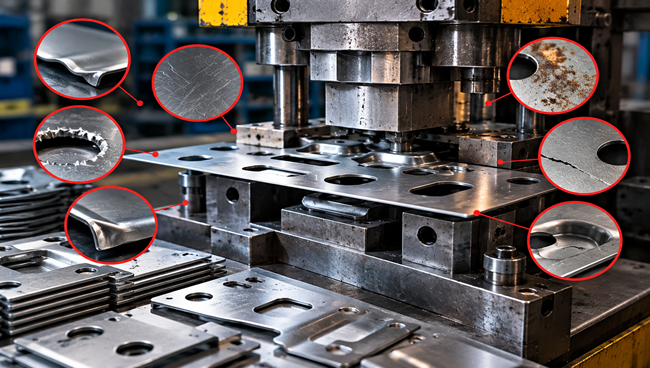
Insufficient clearance can cause rough edges and tool wear, while excessive clearance can cause more rollover, rough fracture zones, and larger burrs.
For thicker materials, some applications may require a total clearance of about 25–30% of the material thickness.
| What you see on the hole | Likely cause | What to do |
|---|---|---|
| A double shiny band on the hole wall, high punching force, fast punch wear | Clearance too tight | Use a die with a larger opening |
| Large burr, heavy rollover, rough or torn edge | Clearance too loose | Use a die with a smaller opening |
| Burr uneven around the hole | Punch and die misaligned | Check alignment and tool holder wear |
| Burr growing during a production run | Dull punch or die | Sharpen or replace the tooling |
Check Hole Spacing and Edge Distance
Hole position also affects punching quality. Holes placed too close together or too close to the edge can weaken or distort the surrounding material.
The recommended spacing between holes, as well as between a hole and the sheet edge, is at least twice the material thickness. For example, in 1/4″ plate, leave at least 1/2″ of solid material between neighboring holes and between any hole and the sheet edge.
When a design contains many closely spaced holes, distributing the punching sequence can also reduce distortion.
Select Equipment Based on the Job
Choose the tool based on the job type and size. For example, a handheld punch tool suits a small job better than a hydraulic machine. For industrial production and thicker materials, hydraulic and CNC punches are better because they can punch repeatedly and efficiently.
| Equipment | Best for | Typical material | Production volume |
|---|---|---|---|
| Handheld punch | Small holes, DIY and repairs | Thin sheet | One-off |
| Portable hydraulic punch | On-site holes in angle, flat bar, and thin plate | Light to medium | Low |
| Ironworker | Holes in plate, flat bar, and angle; also shearing and notching | Medium to heavy plate | Low to medium |
| CNC turret punch | Many holes and repeat patterns in sheet | Sheet and light plate | High |
Avoid Oversized or Undersized Tooling
A larger hole is not automatically easier to punch. Large openings require substantial punching force, particularly in thick or high-strength material. Smaller holes can also create problems, as a narrow punch is prone to bending and accelerated wear.
Therefore, select the right metal punch tool based on the full combination of hole size, material, thickness, spacing, and equipment capacity.
Need Metal Punching in Albuquerque?
The correct metal punch size isn’t a guess; it’s a careful decision based on material thickness, metal strength, punch-to-die clearance, hole spacing, edge distance, tooling style, and machine capacity.
For metal punching in Albuquerque, visit New Mexico Metals LLC. We use the GEKA Bendicrop 60S Universal Ironworker, known for its clear, sharp cuts.
Send us your drawing, and our team will review hole sizes, spacing, and edge distances before the job reaches the machine.
Call us today for more information!
Frequently Asked Questions
What is the minimum hole size for sheet metal?
There is no universal minimum, but you can use 0.75 times the material thickness for aluminum, 1 times the thickness for mild steel, and 2 times the thickness for stainless steel.
Can you punch a hole smaller than the metal thickness?
Yes, you can with fully guided tooling. The exact limit depends on the material, tooling design, machine, and application.
How much clearance should there be between a punch and die?
Clearance depends on the material and thickness. For thicker-material applications, we recommend approximately 25%–30% of the material thickness.
Is a hand-held metal punch suitable for thick steel?
Generally, handheld equipment is better suited to lighter-duty applications. Thick steel might require powered industrial equipment with sufficient punching capacity for the material and hole size.
What should I provide when ordering punched metal?
Provide the metal type and grade, sheet or plate thickness, hole diameter and shape, hole locations, spacing, quantity, and any required dimensional tolerances. This information helps determine suitable tooling and equipment.