
Clean, accurate holes on metal sheets are common requirements across many industries. Two of the most common methods to do this are metal punching and drilling. Each method has distinct advantages and strengths, as well as limitations and ideal use cases.
When working with sheet metal, it can be confusing to weigh the benefits of the two methods and choose the right one for your project. It is important because it impacts productivity, cost, and overall project quality.
If you have also faced this dilemma, this blog is for you. It compares the two methods in detail and helps you determine which is more efficient for your specific needs.
Read on!
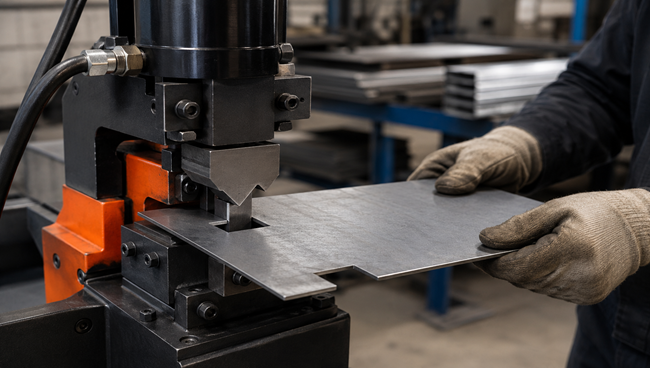
This process involves creating holes by applying shear force with a punch and die set. Unlike drilling, which uses a rotating drill, punching creates clean, accurate holes with a single motion.
Punching is widely used because it produces consistent hole sizes with smooth edges. The precise results are obtained using a range of tools, from manual punches to powered tools, including a hydraulic metal hole punch.
Check out the different types of metal hole punches:
A steel hole punch is designed specifically for mild steel and carbon steel sheets. Steel is tougher than some metals and softer than others, and thus, specific steel hole punches are used to achieve clean, round holes in construction and industrial applications.
A stainless steel hole punch is built to handle harder materials without excessive wear. It ensures precise holes while preserving the strength and finish of stainless steel sheets.
A square hole punch is no different than a regular punch, but creates rectangular shapes, instead of round ones. It is required for electrical panels, enclosures, and switch boxes. These shapes are harder to achieve accurately with drilling alone.
These punches use hydraulic power to deliver high cutting force, cutting through thick, hard metal with minimal effort. It is a fast, efficient method for punching and is widely used across heavy-duty industries.
Using a sheet metal hole punch offers several advantages over drilling:
Punching is especially effective when multiple holes are required in a consistent pattern.
Check out how drilling works, the advantages of using sheet metal, and its advantages:
Drilling involves using a rotating metal drill bit to cut through metal and create a hole. It can handle a range of hole sizes and depths across different metals.
A center punch is used before drilling to create an indentation in the metal sheet, preventing drill bits from wandering and ensuring accurate hole placement.
Here are the multiple advantages of metal drilling:
Drilling also has certain disadvantages, such as:
Let’s compare the two methods to see which one is better:
Punching is significantly faster, especially when creating multiple holes. Drilling takes longer due to its setup, drilling time, and cleanup.
Punching delivers uniform, smooth-edged holes. Drilling accuracy depends heavily on operator skill and often requires deburring.
Drilling handles very thick metal better, while punching excels in thin to medium-thickness sheets. A hydraulic metal hole punch can extend punching capabilities to thicker materials.
Punching reduces labor time and material waste, making it more cost-efficient for repeated operations. Drilling is more cost-effective for a range of hole sizes.
Punching involves less vibration and reduced risk of bit breakage. Drilling requires care to avoid slipping.
A sheet metal hole punch is the better choice when:
Drilling is more suitable when:
Drilling can achieve accurate results when combined with a center punch.
Here are the various use cases of punching and drilling:
In short, punching and drilling are both useful if you know when to use which method. The blog above discussed the advantages and disadvantages in detail so that you can make the right choice for your project.
If you are a DIYer or have short-term punching and drilling needs, it’s advised to outsource, rather than investing in expensive equipment and tools.
Visit New Mexico Metals LLC, where we offer punching, drilling, notching, shearing, and other metal-related services at competitive prices.
Contact us today to learn more about our services!
Que: Is a sheet metal hole punch better than drilling?
Ans: The choice of the method depends on the project’s needs. If you want multiple identical holes, punching is better, but if the hole sizes vary, drilling is recommended.
Que: Can a steel hole punch work on stainless steel?
Ans: A standard steel hole punch may struggle with stainless steel. A dedicated stainless steel hole punch is recommended for best results.
Que: What is a square hole punch for metal used for?
Ans: A square metal hole punch creates rectangular shapes for switches, outlets, and electrical enclosures.
Que: Do I need a center punch for metal before drilling?
Ans: Yes, a center punch for metal helps guide the drill bit and ensures accurate hole placement.
Que: What are the advantages of a heavy-duty hydraulic metal hole punch?
Ans: A heavy-duty hydraulic metal hole punch offers high force, reduced operator effort, clean cuts, and the ability to handle thicker metal sheets efficiently.

To meet the needs of both wholesale and retail customers by providing an extensive selection of metals cut to size with exceptional service.
New Mexico Metals LLC
Address: 5821 Midway Park Blvd NE # F, Albuquerque, NM 87109, United States
Phone: (505) 717-1900
FAX: (505) 717-1769
Email: info@newmexico-metals.com
8:00 AM - 5:00 PM Monday - Friday
9:00 AM - 12:00 PM Saturdays
Copyright © 2026. All Rights Reserved.
Website Design & Digital Marketing By WSI