Summary
Stainless steel tube fittings play a critical role in industrial systems where safety, durability, and precision are essential. These are used across several industries, including oil and gas, food processing, chemical plants, and power generation. These fittings are crucial for leak-free connections and reliable fluid or gas flow.
This blog highlights the importance of these tube fittings, the most common types used across industries, and which grade is best suited for which industry.
The key highlights are:
Industries work with numerous sensitive materials, including gases, chemicals, and various fluids. They need secure connections to transport these materials, and that’s where stainless tube fittings come in.
These are widely used in industrial environments due to their strength, corrosion resistance, and durability.
However, selecting the right material and grade makes a lot of difference. This blog discusses the common types used across industries and why having the right stainless steel tubing suppliers on board is vital.
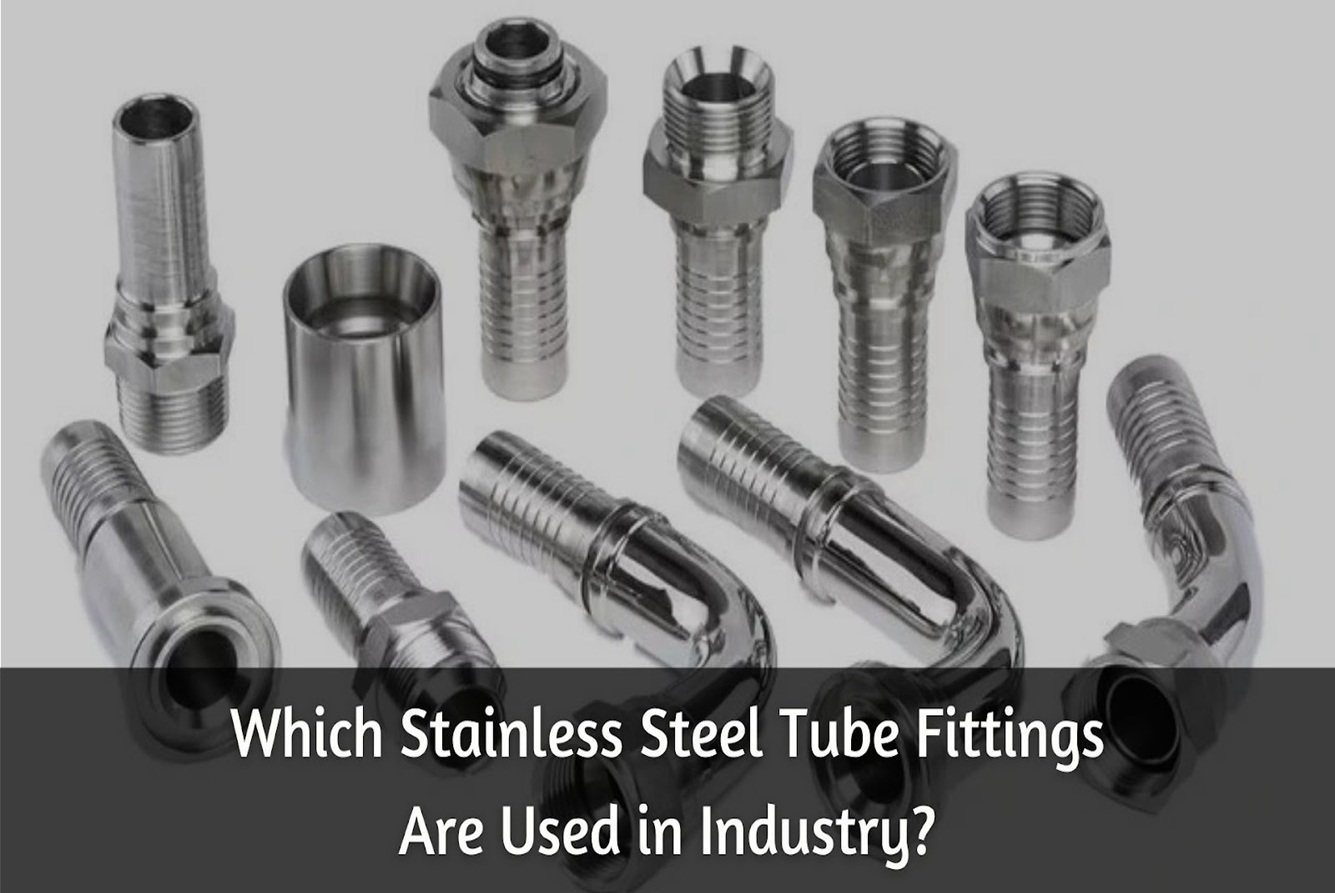
Stainless steel tube fittings are components that connect, terminate, control, or adapt stainless steel tubing within a system. These differ from welded joints and allow for disassembly and maintenance without damaging the tubing.
These fittings are used alongside pipes, coils, mesh, and other components to form complete, integrated industrial systems.
Check out the common stainless steel fittings types:
Compression fittings are among the most widely used stainless steel tube fittings. They use a ferrule to create a tight seal around the tubing, making them ideal for high-pressure and vibration-prone environments.
Flare fittings rely on a flared tube end to form a metal-to-metal seal. These fittings are commonly used in systems that experience temperature changes or pressure fluctuations.
Welded fittings provide permanent, leak-proof connections. They are often selected for critical systems that require maximum strength and minimal maintenance.
Threaded fittings allow easy assembly and disassembly. They are frequently used in utility lines, test systems, and applications requiring frequent adjustments.
These fittings offer quick installation and are used in low-pressure systems or specialized industrial setups where speed and simplicity are priorities.
Read more: How to Bend Stainless Steel Tubing Without Damaging the Finish?
Stainless steel comes in various grades. Not every grade is similar. Some work best in coastal environments, while others are best for extreme temperatures. The following are some commonly used grades in tube fittings:
Selecting the correct grade ensures compatibility with system pressure, temperature, and chemical exposure.
Explore which stainless steel grade aligns best with which industry:
Tube fittings handle high-pressure fluids and corrosive substances, making stainless steel essential for safety and durability. Working with 904L stainless steel suppliers is recommended.
Hygienic design and corrosion resistance make stainless steel fittings ideal for clean processing environments. Grade 304 or 316 stainless steel is best for it. Companies making cutlery or surgical instruments must partner with 420 stainless steel suppliers for the highest-quality metal.
Chemical systems depend on high-grade stainless steel—specifically grades 316 and 904L—to withstand harsh conditions while preventing leaks and contamination.
Tube fittings support steam, water, and cooling lines where long-term reliability is critical.
Other than this, DIYers interested in forging use grade 440C for premium-quality hunting knives, blades, and other applications. Choose a top-notch 440C stainless steel supplier to source quality metal for your needs.
Read more: 5 Reasons Local Stainless Steel Suppliers Are Game-Changers
Tube fittings are rarely used alone. They work alongside stainless steel tubing, pipes, coils, and mesh to create complete systems. The materials used for multiple components should be compatible with each other and, therefore, must be sourced from a reputable stainless steel supplier.
Proper integration reduces stress points, improves system efficiency, and simplifies maintenance.
Key factors that you must consider include:
Consult with New Mexico Metals LLC for accurate guidance on choosing the material.
Stainless steel tube fittings are used in industrial settings for their obvious advantages:
These benefits make them a preferred choice across industrial sectors.
Quality is the first and foremost requirement in every industry, and it can only be assured by partnering with a reputable stainless steel supplier. They ensure consistent dimensions, verified material grades, and reliable performance. There are no pricing hassles, and you get ongoing support whenever you need it. They also help avoid costly rework, component failure, and unnecessary downtime.
There are multiple sources for stainless steel components, such as stainless steel coil suppliers, stainless steel tubing suppliers, and stainless steel pipe suppliers, each with expertise in a specific component. However, you must choose a supplier that offers a comprehensive range of stainless steel products.
Stainless steel tube fittings play a crucial role in many industries. However, what’s even more important is to source these fittings from trusted suppliers.
Choose New Mexico Metals LLC as your partner for the next project. We stock a wide range of stainless steel products to meet the needs of local industries.
Contact us today to learn more!
Que: What are the most commonly used stainless steel tube fittings in the industry?
Ans: Compression fittings, flare fittings, welded fittings, and threaded fittings are the most widely used in industrial applications.
Que: Are stainless steel tube fittings different from stainless steel pipe fittings?
Ans: Yes. Tube fittings are designed for tubing with precise outside diameters, while pipe fittings are used with pipes measured by nominal size.
Que: Which stainless steel grade is best for industrial tube fittings?
Ans: The best grade depends on the application. 316, 904L, and 310 are commonly used for corrosive or high-temperature environments.
Que: Can stainless steel tube fittings be reused?
Ans: Some fittings can be reused, but it is not recommended, as it can affect sealing performance.
Que: How do I choose a reliable stainless steel supplier for tube fittings?
Ans: Choose someone who offers consistent quality standards, material traceability, and required guidance for selecting the right grade.

To meet the needs of both wholesale and retail customers by providing an extensive selection of metals cut to size with exceptional service.
New Mexico Metals LLC
Address: 5821 Midway Park Blvd NE # F, Albuquerque, NM 87109, United States
Phone: (505) 717-1900
FAX: (505) 717-1769
Email: info@newmexico-metals.com
8:00 AM - 5:00 PM Monday - Friday
9:00 AM - 12:00 PM Saturdays
Copyright © 2026. All Rights Reserved.
Website Design & Digital Marketing By WSI