Quick answer
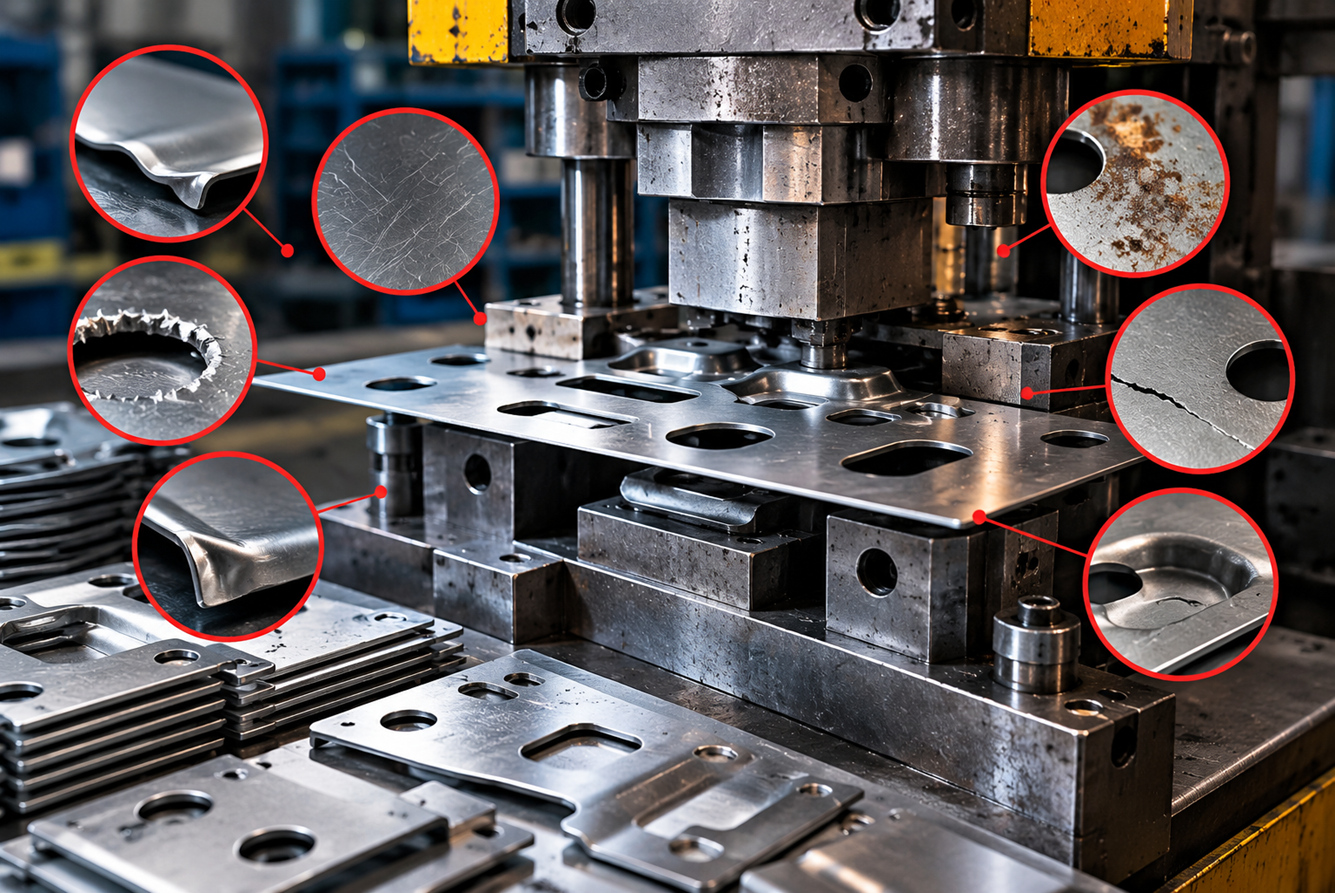
Metal stamping requires a thorough understanding of metals, their grades, stamping tools, and methods. Common mistakes include choosing the wrong grade and tooling, using worn tools, and not determining die clearance, which can cause cracks and burrs.
Quick summary
Metal stamping requires the right materials, tooling, equipment settings, and quality checks to produce accurate, reliable parts. Even small mistakes can cause cracks, burrs, surface damage, dimensional errors, and costly material waste. It’s crucial to understand these mistakes in advance and how to avoid them. This blog has discussed them in detail.
- Choose the correct metal grade and thickness for the intended application.
- Use suitable dies, tooling clearance, and press settings.
- Inspect tools regularly to prevent burrs and uneven edges.
- Control material alignment to maintain accurate dimensions.
- Avoid excessive force and incorrect forming techniques that can damage parts.
- Protect metal surfaces from scratches, contamination, and corrosion.
- Inspect finished components before they move to assembly or installation.
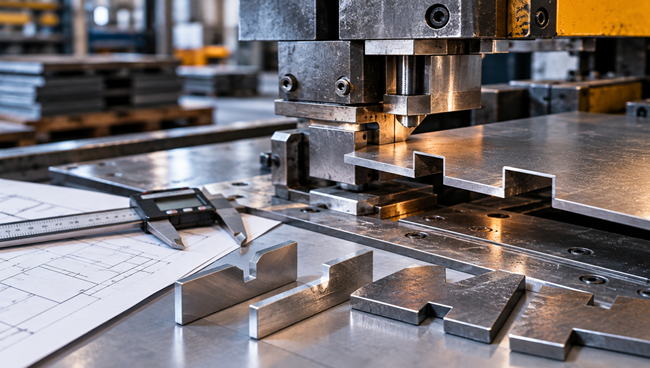
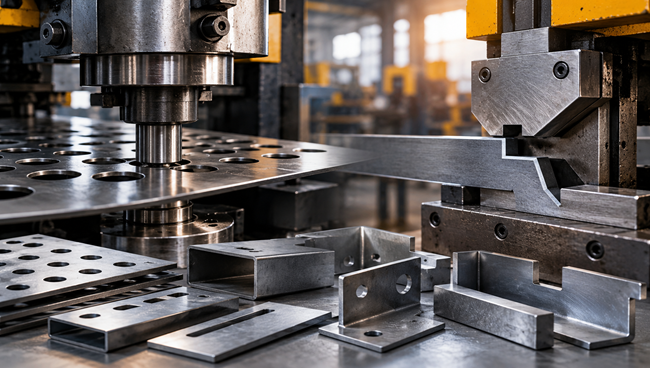
Metal stamping is the process of turning a sheet metal into specific shapes or carving specific shapes out of it. It may sound similar to metal punching, and yes, punching is one metal stamping method.
This process is applied to create industrial components such as brackets, panels, enclosures, and parts used in construction and manufacturing.
When working on an industrial project, you must ensure there are no mistakes and that the process doesn’t compromise the strength, appearance, or accuracy of finished parts.
This blog discusses ten common mistakes that can render industrial components useless. In our shop, most rejected parts trace back to just a few of these — grade, clearance, and tool wear — which is why they come first.
1
Mistake 1Selecting the Wrong Metal Grade
Not every metal and its grade is the same. Not even two stainless steel grades are the same. The chosen stamping method should match the underlying sheet metal; otherwise, it can cause cracking, excessive springback, poor formability, or premature wear.
How to avoid it: Consider the part’s operating environment, required strength, corrosion exposure, and forming needs before choosing a material. Ensure that the chosen grade meets the project’s specifications.
2
Mistake 2Ignoring Material Thickness
A thicker sheet requires more force than a thinner steel sheet. Using the wrong tool for thicker material can cause premature tool wear and damage the metal.
How to avoid it: Verify thickness before processing, and ensure your tooling and equipment can handle the selected material. Consistent thickness is particularly important when producing multiple parts that must fit together.
3
Mistake 3Using Worn or Damaged Tooling
Punches and dies wear over time and can become dull, creating rough edges, excessive burrs, and inconsistent dimensions. Damaged tools damage metal and also increase the risk of component failure.
How to avoid it: Establish a regular inspection and maintenance schedule. Repair or replace tools to reduce defects.
4
Mistake 4Setting Incorrect Die Clearance
Die clearance is the gap between the punch and die. If the space is too small or too large for the material’s thickness and properties, it will produce rough edges, large burrs, or excessive tool wear.
How to avoid it: Match the die clearance to the material’s thickness, metal grade, and tooling.
5
Mistake 5Misaligning the Metal Sheet
Poor alignment means creating shapes in the wrong locations. It leads to inconsistent part dimensions, rough edges, and misalignment of the finished component.
How to avoid it: Check alignment before starting. Use clamps and appropriate guides to confirm positioning and align the steel sheet.
6
Mistake 6Applying Excessive Force
Excessive stamping force damages tooling, distorts thin sheets, and cracks formed areas. Insufficient force leaves the component incomplete.
How to avoid it: Align tool force with the material’s thickness and tool design to achieve the desired result.
7
Mistake 7Neglecting Lubrication
During forming, friction between the material and tooling can increase heat, cause surface damage, and wear the tool. Improper lubrication can also cause sticking and inconsistent results.
How to avoid it: Use a lubricant appropriate for the metal and process, where required. Apply it consistently and ensure that residues can be removed.
8
Mistake 8Ignoring Grain Direction and Forming Limits
Formed steel sheets have grain directions, and ignoring them can lead to cracking.
How to avoid it: Review the material’s forming characteristics and consider grain direction when planning bends. Select a suitable bend radius and test demanding shapes before full production.
9
Mistake 9Overlooking Surface Protection
Scratches, oil stains, and corrosion reduce a component’s quality and might create problems during finishing and installation. Steel sheets can get damaged during storage and handling, which affects assembly.
How to avoid it: Keep materials and tooling surfaces clean. Use suitable handling equipment, separate finished parts where needed, and store metal in conditions that limit moisture and contamination.
10
Mistake 10Skipping Quality Inspections
In industrial projects, skipping inspections isn’t an option because it lets dimensional errors, cracks, burrs, and surface defects pass unnoticed.
How to avoid it: Make inspection part of the process and check dimensions, edges, and surfaces.
Quick Reference: Stamping Mistakes at a Glance
| Mistake | What it causes | How to prevent it |
|---|---|---|
| Wrong metal grade | Cracking, springback, poor formability | Match grade to environment and forming needs |
| Ignoring thickness | Premature tool wear, damaged metal | Verify thickness; match tooling and equipment |
| Worn tooling | Rough edges, burrs, inconsistent dimensions | Regular inspection and replacement schedule |
| Wrong die clearance | Large burrs, rough edges, tool wear | Set clearance to thickness and grade |
| Sheet misalignment | Shapes in wrong locations, inconsistent parts | Clamps, guides, check before starting |
| Excessive force | Damaged tooling, distorted sheets, cracks | Align force with thickness and tool design |
| No lubrication | Heat, surface damage, sticking | Use appropriate lubricant consistently |
| Ignoring grain direction | Cracking at bends | Plan bends around grain; test demanding shapes |
| Poor surface protection | Scratches, stains, corrosion | Clean surfaces, proper storage and handling |
| Skipping inspections | Undetected errors reaching assembly | Build inspection into the process |
How To Ensure Accuracy and Quality In Industrial Stamping?
In a DIY project, you can ignore mistakes, but in industrial projects, too much is at stake, and mistakes can be very costly. So, the best way to ensure quality is to consult a professional metal stamping expert. Experts have the knowledge and tools to handle large-scale projects. They understand metals and choose the right stamping methods and tools for your material.
Need Metal Stamping in Albuquerque?
For metal stamping services in Albuquerque, choose New Mexico Metals LLC. We have state-of-the-art machines and years of experience to back us. We can meet your needs, whether you’re buying retail or wholesale.
For industrial stamping, experience matters most. However, the most important factor is choosing the right metal for your needs. We also offer various metals and grades and can help you choose the right one for your project.
Visit us for details!
Frequently Asked Questions
What are the most common metal stamping defects?
Choosing the wrong material, tools, and method are the most common mistakes, which can lead to burrs, cracks, and dimensional errors.
How can I prevent burrs during metal stamping?
Use properly matched punches and dies, check for tool wear, die clearance, and clamping to avoid burrs.
Does stainless steel sheet require special stamping considerations?
Stainless steel grades differ in strength, hardening, and formability and thus require proper consideration when choosing grade, lubrication, and tooling.
How does material thickness affect stamping quality?
Thickness affects the required force, tool clearance, forming behavior, and finished dimensions. The thicker the material, the more force is required.
Why is quality inspection important after stamping?
Inspection identifies dimensional inaccuracies, burrs, and other defects before assembly. It helps prevent waste, reduce rework, and ensure that every component and its parts match project specifications.