Summary
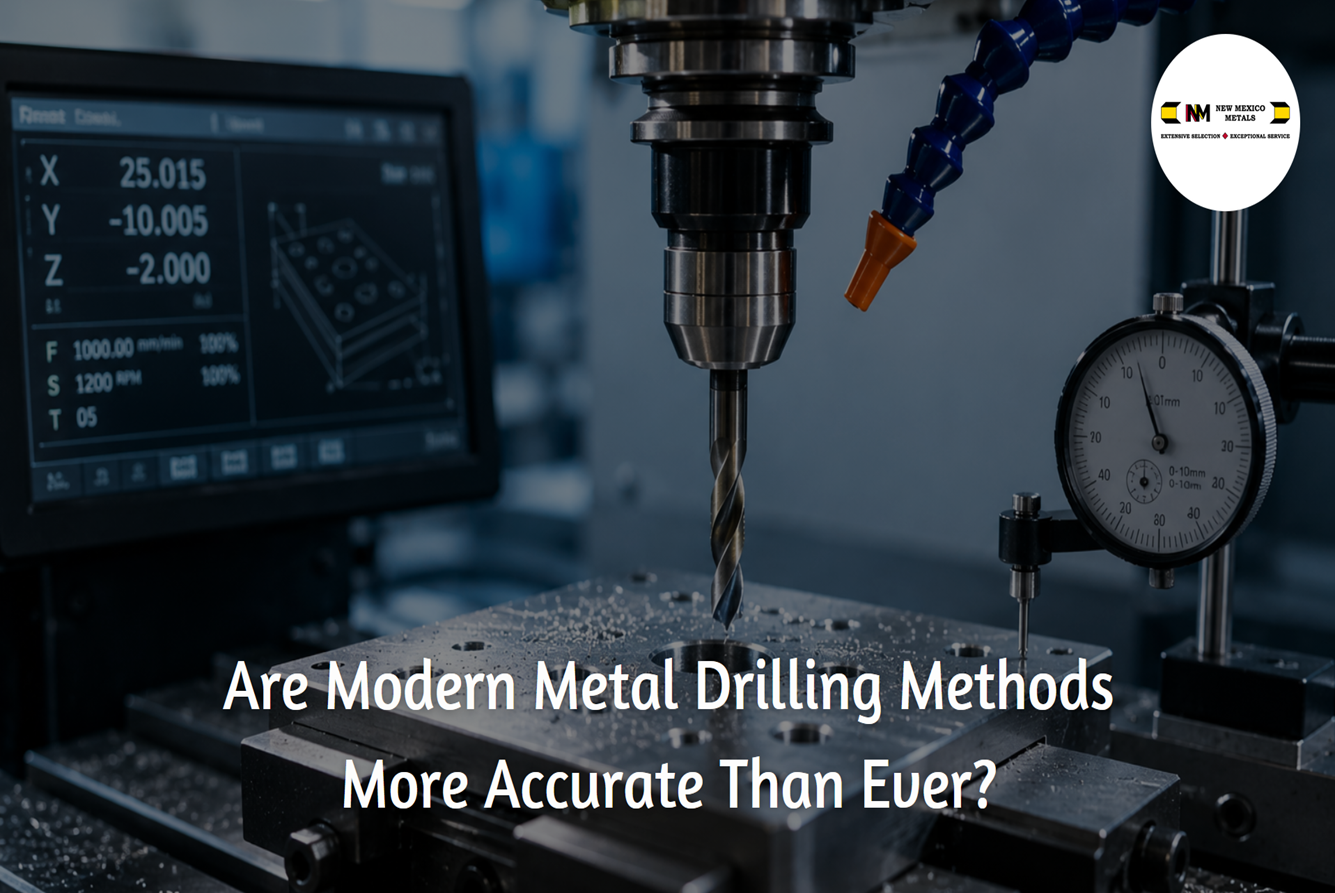
Today, industries are more inclined towards modern metal drilling. Thanks to automation and CNC-equipped advanced tooling, drilling has become faster and easier, as today’s drilling systems can achieve tight tolerances. However, the question is whether modern metal drilling is more accurate than ever. Which industries are these benefiting if so?
The blog answers all these questions.
The key highlights of the blog are:
Precision is the biggest priority in modern manufacturing. Metal drilling aids by carving precise holes and shapes in various metals, including stainless steel, aluminum, and copper. Whether you produce machinery components, architectural materials, or household items, accurately drilled holes are essential for proper assembly and long-term performance.
While today’s drilling combines automation, smart monitoring, and precision, is it more accurate than ever?
The topic is discussed in depth on this blog.
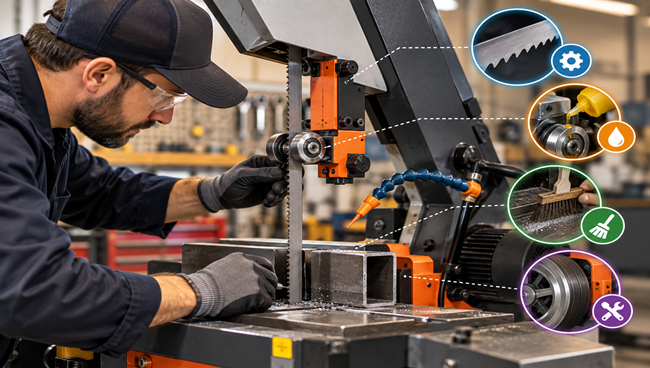
Metal drilling creates precise holes using rotating drill bits. The operation is simple: the sheet metal or component is clamped, and a drill is driven through it with controlled power to create the desired shape or hole. It is crucial for fastening, assembly, and structural applications.
Imagine a metal sheet being discarded because the hole was too wide or a millimeter too short for fastening. Even the slightest errors can cause poor alignment, assembly issues, and premature component failure. Thus, precision is much-coveted in drilling to ensure that parts fit together correctly.
Construction, automotive, aerospace, energy, industrial equipment, and heavy machinery all depend on high-precision drilling.
Metal drilling has evolved and continues to do so. Here is how the technology compares to previous ones:
Older manual drilling relied heavily on operator skill. Modern equipment uses digital controls that deliver consistent accuracy throughout production.
CNC systems automatically position and drill materials according to programmed specifications, thus improving repeatability.
Automation drives the large production runs today while reducing setup time and maintaining uniform quality.
Modern machines operate at optimized speeds and can drill multiple angles without repositioning the workpiece, improving efficiency.
Sensors monitor vibration, temperature, and tool wear, allowing adjustments before defects occur.
Metal drilling requires careful consideration of a few factors to derive the best results:
Advanced Machine Calibration: The equipment should be calibrated regularly to maintain alignment and ensure precise hole placement.
Precision Tooling and Drill Bit Design: Using the improved carbide, cobalt, and coated drill bits reduces deflection and extends tool life.
Digital Measurements and Real-Time Adjustments: Modern machines use laser measurement systems and real-time monitoring to provide the fastest feedback and verify drilling accuracy before an incorrect batch is produced.
Reduced Human Error Through Automation: Automation has reduced manual intervention, resulting in fewer errors and improved consistency.
Enhanced Material Handling Systems: Automatic clamping and positioning reduce movement during drilling, producing cleaner, more accurate holes.
It is the biggest question: how accurate are the modern drilling tools? Here is the answer:
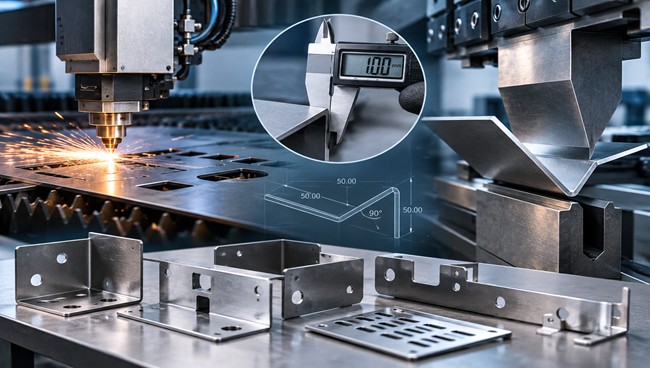
Modern CNC drilling can achieve tolerances of ±0.005 inch (±0.127 mm), depending on equipment, material, and application. It is a greater improvement over conventional drilling.
The accuracy depends on the material properties, the choice of the drill, cutting speed, drill condition, machine rigidity, and proper coolant use. Experts understand the importance of these factors and make the necessary adjustments to achieve the best results.
Manufacturers verify hole size, alignment, and surface quality using digital measuring equipment and routine inspections.
Metal drilling might seem like a simple process, but precision makes it stand out. It offers multiple advantages for businesses:
These benefits help industries ensure that every product or component that goes out there is reliable and strong.
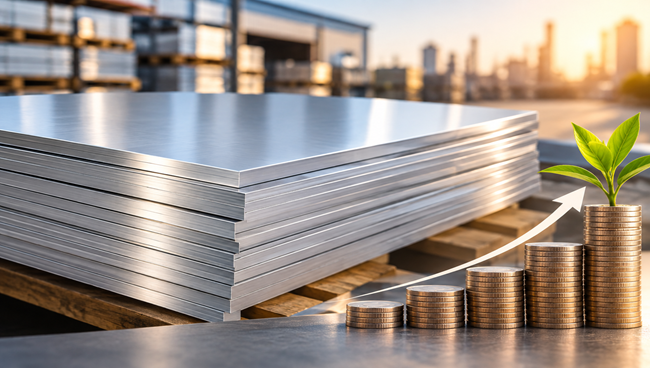
Many steel and metal suppliers also provide metal processing services, such as drilling. Those who offer advanced drilling have a competitive edge as industries prioritize providers who can offer everything in one place. Many metal suppliers not only supply metal but also provide value-added services. It gives them a competitive edge.
Steel manufacturers are investing in precision drilling technologies as part of their vertical diversification strategies. Efficiency improves, they meet strict industry standards, increase productivity, and even reduce waste.
Steel building manufacturers require accurately drilled structural members for efficient construction.
Precision drilling contributes to:
Accurate drilling contributes directly to stronger and more reliable steel structures.
Some of the drilling challenges are:
Modern drilling requires relying on the following to address these issues:
Modern metal drilling is unquestionably more accurate than ever before. Advanced technologies have enabled manufacturers and steel suppliers to produce consistent, high-quality results.
However, technology alone isn’t enough. You also need an expert partner on your side who can manage your operations, for example, a drilling professional. New Mexico Metals LLC is the perfect partner you need for metal drilling operations. We embrace technology and are known for our top-quality drilling operations.
If you have any questions or need metal drilling for your project, feel free to reach out.
Que: Are modern metal drilling methods more accurate than traditional drilling methods?
Ans: Yes. CNC automation, digital controls, and advanced tooling provide far greater accuracy and repeatability than traditional manual drilling.
Que: What technologies have improved metal drilling accuracy?
Ans: CNC machines, multi-axis drilling, laser measurement systems, smart sensors, coated drill bits, and automated quality control have all improved drilling precision.
Que: How precise can modern metal drilling machines be?
Ans: Many modern CNC drilling systems routinely achieve tolerances around ±0.005 inch, depending on the equipment and application.
Que: Why is drilling accuracy important in steel manufacturing?
Ans: Accurate drilling improves assembly, structural integrity, product quality, and production efficiency while reducing waste and rework.
Que: How do steel suppliers ensure drilling quality?
Ans: Steel suppliers maintain drilling quality through calibrated equipment, precision tooling, inspection procedures, digital measurements, and strict process controls.

To meet the needs of both wholesale and retail customers by providing an extensive selection of metals cut to size with exceptional service.
New Mexico Metals LLC
Address: 5821 Midway Park Blvd NE # F, Albuquerque, NM 87109, United States
Phone: (505) 717-1900
FAX: (505) 717-1769
Email: info@newmexico-metals.com
8:00 AM - 5:00 PM Monday - Friday
9:00 AM - 12:00 PM Saturdays
Copyright © 2026. All Rights Reserved.
Website Design & Digital Marketing By WSI