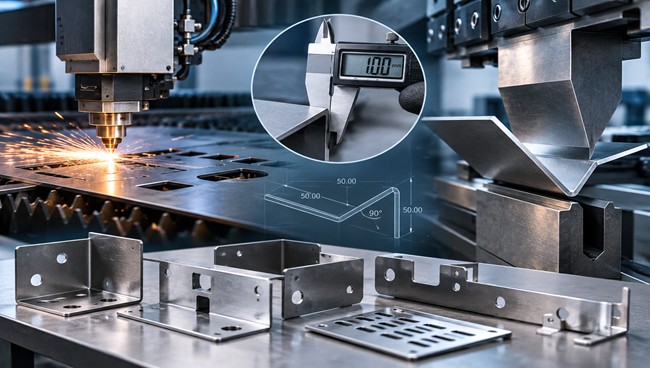
Metal punching isn’t merely about creating holes; it is a fundamental process in industrial and commercial operations. It is used to create openings, slots, and shapes in different types of metal. The right tool ensures that the rendered metal sheet is punched as intended.
There are several tools and machines used for metal punching, and hand handheld metal punch is one of them. It is a widely popular tool, but it often makes operators wonder how much thickness it can handle.
Understanding the tools and machines is important so you can pick the right one for your needs. This blog has discussed sheet metal punch hole tools in detail, their limitations, and when it’s the right time to use an industrial metal hole punch.
Read on!
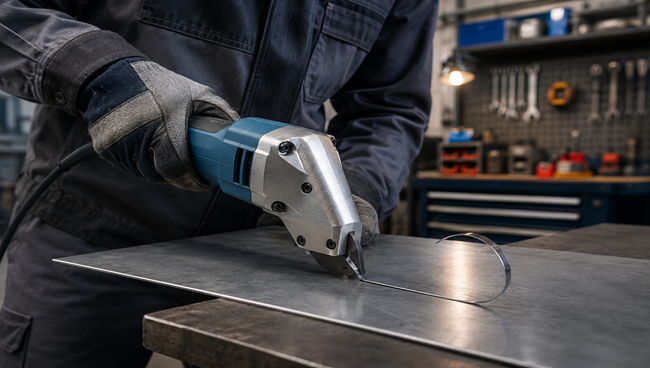
A hand-held metal punch is a compact tool designed to create simple holes in thin to medium-thick metal sheets. It features the standard punch and die mechanism and is ideal for smaller jobs. These punching tools are both manual and powered, as well as portable, affordable, and easier to handle.
They are commonly used for:
These are essential tools in any operator’s arsenal, but they can’t match a heavy-duty industrial metal hole punch.
The ability of any metal punch tool to handle thick metal depends on:
For example:
A typical hand-held metal punch works best on metal sheets between 16 gauge to 12 gauge.
Thicker materials require significantly more force and often exceed manual punch capacity.
Harder metals, such as stainless steel, require more force to punch, making manual tools less suitable for this purpose.
Hand-held punches have certain limitations, such as:
Limited Tonnage: They are only suitable for thin to medium metals and are unable to punch through thick or hard metals, such as stainless steel.
Risk of Tool Damage: Forcing the tool onto thick metal can damage both the tool and the metal.
Imprecise Results on Thick Metal: It is difficult to achieve cleaner holes on thick metals.
Operator Fatigue: Punching thicker metals manually requires more strength, which reduces consistency and causes unnecessary operator fatigue.
These are the various reasons that have encouraged businesses and industries to switch to powered and industrial metal hole punches.
It’s appropriate to use an industrial punching machine when working with thick or harder materials. These machines are preferred due to:
Industrial punches are designed to punch through structural steel, thick iron components, and other stronger metals, used in heavy-duty industries.
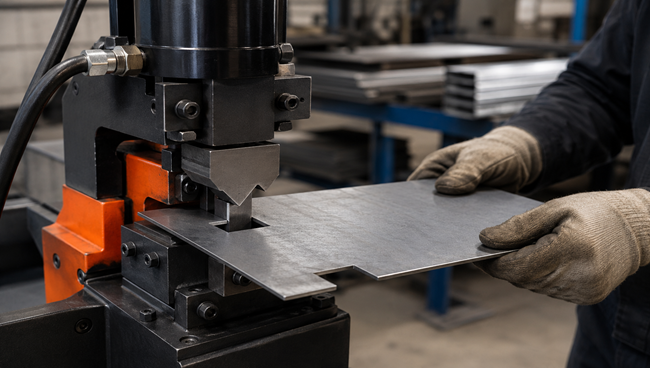
Hydraulic metal punching machines are one of the strongest and are used exclusively for thicker metals in large-scale operations. They utilize hydraulic pressure to generate an enormous force, punching through the thickest metals with considerable ease.
They are used for:
Hydraulic punches are known for their cleaner holes, minimal distortion, and faster speed, which makes them a favorite in industrial settings.
Here are a few key factors to consider when choosing between a hand-held punch, an industrial punch, or a hydraulic machine:
Material Thickness: Thicker metals require stronger machines, such as hydraulic or mechanical punches.
Material Type: Softer metals, such as aluminum, work well with hand-held machines, while stainless steel and hardened metals require greater tonnage.
Hole Size: The larger the holes, the more force is needed.
Work Volume: Hand-held punches are not meant for industrial operations.
Portability: Manual punches are easily portable and affordable, while machines are ideal for shop settings.
Affordability: Manual punches are very affordable, whereas hydraulic, mechanical, and CNC machines require a significant investment.
A hand-held metal hole punch is a versatile tool, but it is not meant for thick and hard metals. For tougher metals, you need hydraulic or mechanical machines.
If you are unsure about which metal hole punch is needed for your operations, visit New Mexico Metals LLC in Albuquerque, your reliable and trustworthy source for all your metal needs. We offer precision, power, and long-term reliability, thanks to our state-of-the-art machines and trained staff.
For more information, give us a call today.
Que: What is the maximum thickness a hand-held metal punch can handle?
Ans: A hand-held punch can work well up to 12–16 gauge mild steel. Beyond that, punching becomes difficult and may damage the tool.
Que: Can I use a hand-held metal punch on stainless steel?
Ans: Yes, you can use it on very stainless steel sheets. If it is harder and thicker, you need a hydraulic or industrial punch.
Que: What’s the difference between a hand-held punch and a hydraulic punch?
Ans: A hand-held punch relies on manual force, while a hydraulic punch uses hydraulic pressure to generate high tonnage and punch through thick metals easily.
Que: How do I ensure clean holes in thick metal?
Ans: Use a hydraulic punch, sharp dies, proper lubrication, and correct alignment to achieve smooth, burr-free holes.
Que: Is it worth investing in a hydraulic metal punching machine for small projects?
Ans: A CNC machine is worth it if you need it for industrial operations. However, for occasional uses, renting is the wiser choice.

To meet the needs of both wholesale and retail customers by providing an extensive selection of metals cut to size with exceptional service.
New Mexico Metals LLC
Address: 5821 Midway Park Blvd NE # F, Albuquerque, NM 87109, United States
Phone: (505) 717-1900
FAX: (505) 717-1769
Email: info@newmexico-metals.com
8:00 AM - 5:00 PM Monday - Friday
9:00 AM - 12:00 PM Saturdays
Copyright © 2026. All Rights Reserved.
Website Design & Digital Marketing By WSI