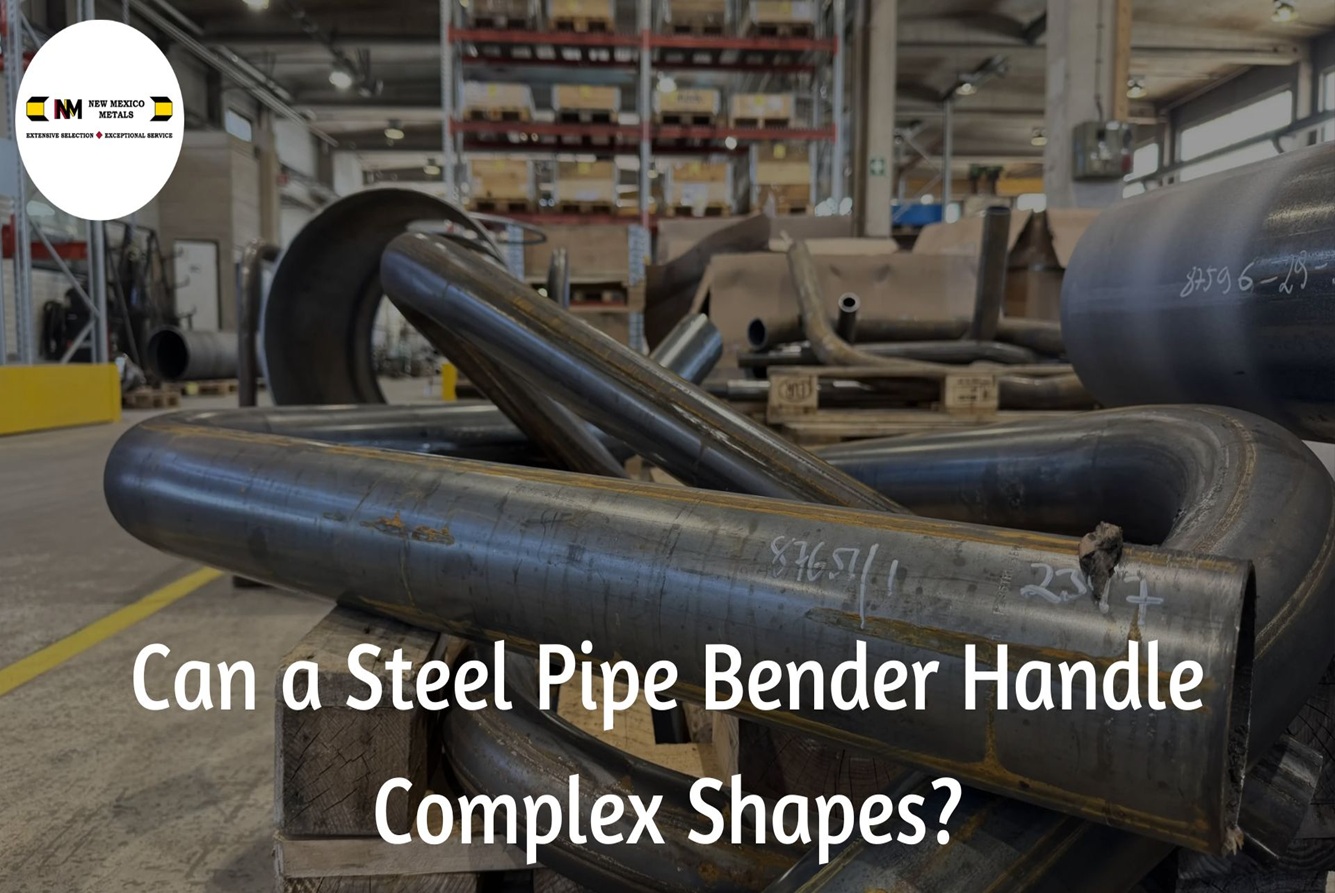
Modern steel bending technologies have advanced significantly, allowing equipment such as steel pipe and steel tube benders to create complex shapes with high precision. Whether you need multi-angle bends or curved geometric shapes, modern tools can do that. In particular, hydraulic sheet metal bending machines are very popular in the industrial landscape, as they offer precise bends.
This blog has discussed the use of steel pipe benders for handling complex shapes.
The key highlights of the blog are:
Businesses should thoroughly understand these factors before investing in a steel pipe bender.
A steel pipe bender is a machine that shapes pipes by applying controlled force to bend them into desired angles or curves. It works by clamping the pipe and applying pressure through dies or rollers to achieve a specific bend radius.
Why is it important? Because hard metal can crack or warp under incorrect pressure or due to the non-consideration of the curve radius.
If you are part of an industry that relies on steel pipe bending regularly and don’t know whether it can handle complex shapes, this blog is for you. Check out its usefulness, limitations, and tips for achieving complex bends.
Read on!
Here are different types of steel-bending equipment:
A steel pipe bender is specifically designed for round pipes and is commonly used in construction, piping systems, and structural applications. It can produce both simple and complex bends.
While one might think that a steel tube and a pipe are the same, they aren’t. Tubes have thin walls, which make them more prone to breaking during bending. A steel tube bender offers greater precision for tight-radius bends and intricate shapes.
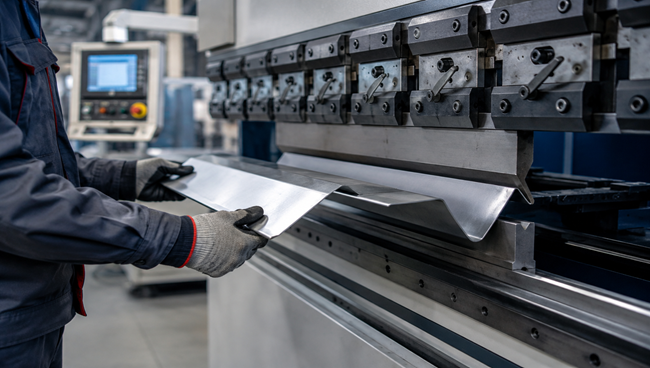
A sheet metal bender is used for flat metal sheets rather than pipes or tubes. While it cannot directly bend pipes, it plays a role in forming complementary components in metal bending projects.
Complex shapes in pipe bending are those that create high levels of internal stress, involve multiple bends, and tight-radius curves.
For example, an S-shaped curve is a complex shape because it involves bending a pipe immediately in another direction after a straight bend. Multi-stage forming is also considered a complex shape.
Such shapes require high precision and advanced equipment to maintain structural integrity and dimensional accuracy.
Whether a steel pipe bender can handle complex shapes depends on the machine you have, its capabilities, and the level of technology it uses. While basic pipe benders can create simple bends, such as a 90-degree bend, a hydraulic steel bending machine can produce highly intricate designs.
Advanced machinery can create multiple bends in a single pipe while maintaining consistency. However, it requires expertise, advanced tooling, and proper setup to do that.
It will help you to understand the factors that impact bending and how they play a role in complex steel pipe bending:
Different metals behave differently during bending. Stainless steel is a hard metal and requires more force and precise control to deform it perfectly. A stainless steel pipe bender is specifically designed to handle such materials.
The bend radius determines how tight a curve can be. Smaller radii increase the risk of cracking or deformation, underscoring the importance of precision equipment.
Not all machines are designed equally. Some can handle simple bending, while others, such as a CNC stainless steel pipe bender, offer higher accuracy and repeatability than manual machines.
The quality and design of dies directly affect the final shape. Proper tooling ensures smooth bends and reduces the risk of defects.
Steel bending involves relying on multiple techniques to achieve accuracy and precision. Some of those techniques are:
These methods allow operators to create intricate shapes while maintaining material integrity.
While advanced machines can produce complex shapes, they have limitations. When it comes to extremely tight radius and hard metals, there is a high risk of deformation. Thick-walled pipes require higher force, increasing equipment strain.
Additionally, even an advanced steel-bending machine can’t obtain a complex shape and requires a combination of tools, including a steel tube bender, to complete the design.
A steel tube bender is used for steel tubes, especially when tight radii or complex shapes are required.
On the other hand, a sheet metal bender is used for flat metals and cannot handle cylindrical shapes. These are used to create panels, brackets, and structural components.
The multiple advantages are the reasons why advanced steel-bending machines are so popular. Some of them are:
Advanced hydraulic sheet-metal bending systems deliver consistent results, making them essential for industrial applications.
Steel bending is used across various industries, including but not limited to:
These applications rely on precise bending to ensure that the final products offer both functionality and aesthetics.
Consider the following when choosing a steel bending machine:
Consult a local expert, such as New Mexico Metals LLC, before you invest in a bending machine. For intricate designs, it’s advisable to hire an experienced team that can provide metal-bending services for your project. Outsourcing metal bending is often a better alternative than investing in advanced machinery and workforce training.
A steel pipe bender can create complex shapes; however, it’s not as easy as it seems. While proper tooling is crucial, it also requires determining the correct bend radius and exercising precise control to achieve accurate bends. Also, steel bending and sheet metal bending differ significantly.
Professional expertise is crucial. Thus, hire New Mexico Metals LLC for your steel bending needs. You deserve quality service, so we rely on state-of-the-art machines to handle your project. Our years of expertise, commitment to quality and perfection, and our staff’s unmatched excellence make us the best choice for steel bending services.
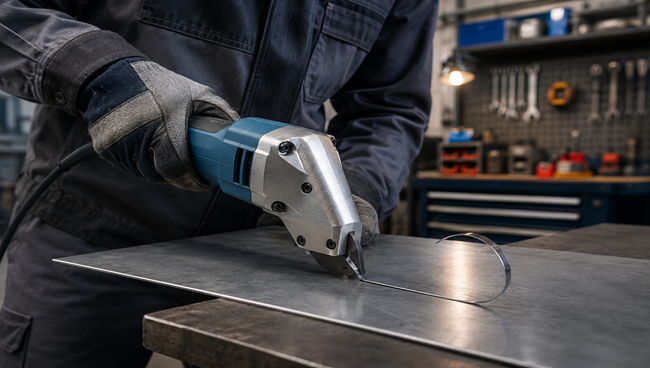
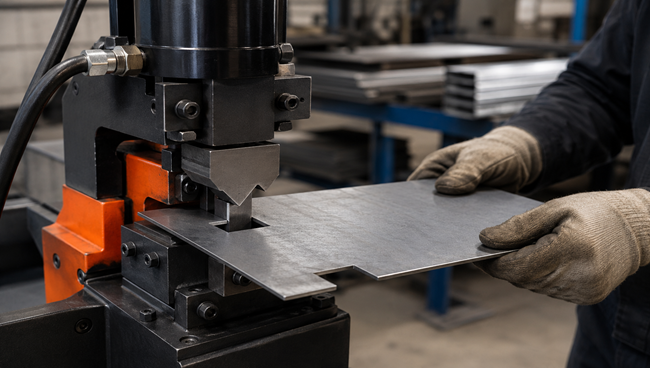
We also offer other services, such as metal shearing, cutting, punching, notching, etc.
For any metal-related needs, visit us!
Que: Can a steel pipe bender create multiple bends in one pipe?
Ans: Yes, advanced machines can perform multiple bends with high precision, especially CNC alternatives.
Que: What is the difference between a steel pipe bender and a steel tube bender?
Ans: A pipe bender is designed for thicker pipes, while a steel tube bender is better suited for thinner-walled tubing and precision applications.
Que: Can complex shapes weaken the steel?
Ans: Yes, complex bends involve determining the correct radius and using proper tooling, the lack of which can weaken the steel.
Que: Is CNC bending necessary for complex shapes?
Ans: CNC bending is highly recommended for complex shapes because it ensures accuracy, repeatability, and consistency.
Que: Can a sheet metal bender be used for pipes or tubes?
Ans: No, a sheet metal bender is designed for flat materials and cannot be used for bending pipes or tubes.

To meet the needs of both wholesale and retail customers by providing an extensive selection of metals cut to size with exceptional service.
New Mexico Metals LLC
Address: 5821 Midway Park Blvd NE # F, Albuquerque, NM 87109, United States
Phone: (505) 717-1900
FAX: (505) 717-1769
Email: info@newmexico-metals.com
8:00 AM - 5:00 PM Monday - Friday
9:00 AM - 12:00 PM Saturdays
Copyright © 2026. All Rights Reserved.
Website Design & Digital Marketing By WSI