Summary
Modern sheet metal bending is far more advanced than simply shaping metal into angles. Professionals combine engineering knowledge, CNC technology, precision tooling, and quality control to produce accurate bends while minimizing waste. Every product, whether simple or complex, requires careful planning and execution to ensure proper assembly and long-term performance. Professionals today rely on advanced metal bending services to achieve complex sheet metal bending.
Explore how they do it in this blog.
The key highlights of the blog are:
Today, every piece of metalwork requires precision and accuracy. Whether it’s manufacturing, automotive, construction, or industrial needs, consistency and accuracy are much coveted. That’s why industries rely on professional expertise to get accurate bends, angles, and material positioning every time.
The question is- how do they do it? How do they handle complex metal bending in Albuquerque?
This blog answers this question.
It refers to permanently deforming flat metal into desired angles or shapes without cutting or welding it. A controlled force is applied using specialized equipment to create bends while preserving structural integrity.
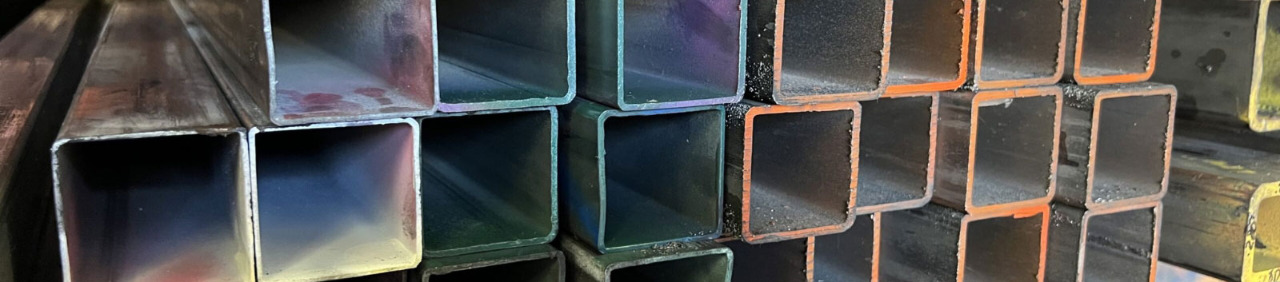
Commonly bent materials include:
Bending isn’t limited to one specific metal, but you must understand the metal’s characteristics to produce strong, durable components.
Not every bending project is straightforward. Complexity increases when projects involve:
Every material behaves differently when bent. Steel, stainless steel, and aluminum each respond differently during bending, requiring adjustments to tooling, force, and bend allowance calculations.
Professionals understand the nuances and adjust machines accordingly.
Professional metal bending services begin with detailed planning long before production starts.
The planning process includes:
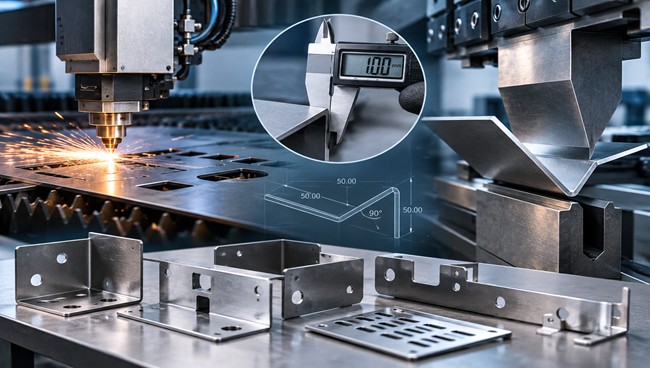
Modern CAD and CAM software allows operators to simulate the entire bending process before the first sheet is processed, reducing costly trial and error.
Some common equipment used by professionals includes:
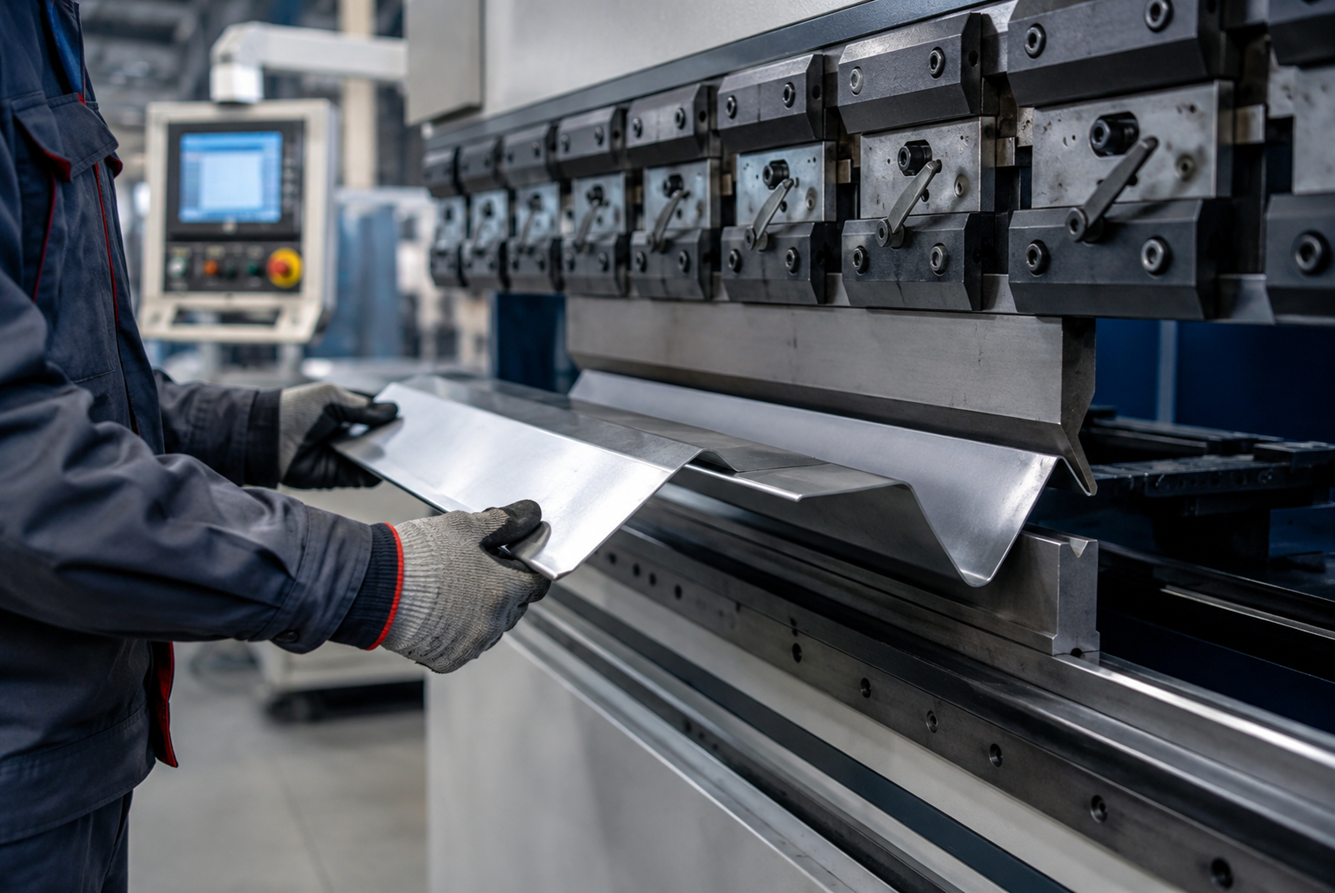
CNC Press Brakes: Automatically control ram position, pressure, and bend angle for exceptional precision.
Servo-Electric Press Brakes: Offer improved energy efficiency and excellent repeatability.
Robotic Bending Systems: Automate loading, positioning, and unloading for high-volume production.
Laser Measurement Systems: Monitor bend angles in real time and automatically correct deviations during production.
Advanced tooling such as precision dies, segmented punches, and hydraulic clamping systems further improves consistency.
Here is a complete step-by-step process of sheet metal bending as used by professionals:
A disciplined process is essential to ensure consistency and long-term performance.
Several issues can affect bend quality if not properly managed, which are discussed here:
Spring Back: Metals tend to return to their natural position. Professionals address it by overbending based on the material’s properties.
Cracking: Overbending strong materials can result in cracks. This requires choosing the correct bend radius and orienting the material with the grain to achieve the desired results.
Wrinkling: Proper tooling support and controlled pressure reduce material wrinkling.
Dimensional Errors: Precision back gauges, laser measurement systems, and routine inspections maintain tight tolerances throughout production.
CNC technology has transformed sheet metal bending by improving speed, repeatability, and accuracy.
Here are the benefits it offers:
CNC machines have transformed the way professionals handle complex projects today. They allow repeatability, meaning repeat jobs can be completed with minimal setup time.
Steel bending is more demanding than bending softer materials because steel has greater strength and springback characteristics.
High-strength steels require greater forming forces and more accurate compensation for springback. The lack of proper techniques can lead to cracking, distortion, or dimensional inaccuracies. Material knowledge and advanced equipment are combined to get accurate results in every batch.
Metal bending is more than just bending metal, and that’s why you should consider hiring professional metal bending services. They have advanced equipment, skilled operators, and proven quality control processes to produce accurate, repeatable results.
They offer the following advantages:
When searching for a metal bending company near me or sheet metal bending near me, look for experience, equipment, and a willingness to embrace new technology. You need efficiency and consistency for long-term contracts and projects.
Complex sheet metal bending requires a combination of advanced machinery, understanding of metals, and years of experience to deliver the desired results. If you need complex metal bending, contact us at New Mexico Metals LLC.
We stock the best quality materials and provide a complete range of metal-related services, including metal bending. Our trained staff is here to help you with anything you need.
Give us a call today!
Que: What is the difference between metal bending and sheet metal bending?
Ans: Metal bending is a broad term that covers bending various metal forms, including bars, tubes, and plates. Sheet metal bending specifically refers to bending thin metal sheets into precise shapes and angles.
Que: How do professionals ensure accuracy in complex sheet metal bending projects?
Ans: Professionals use CAD/CAM software, CNC press brakes, precision tooling, laser angle measurement systems, and routine inspections to maintain tight tolerances throughout production.
Que: What equipment is commonly used for precision metal bending?
Ans: Common equipment includes CNC press brakes, servo-electric bending machines, robotic bending systems, precision punches and dies, hydraulic clamping systems, and laser measurement devices.
Que: Why is steel bending more challenging than bending other metals?
Ans: Steel has higher strength and greater springback than softer materials such as aluminum. It requires greater forming force, accurate bend calculations, and specialized tooling to prevent cracking and dimensional errors.
Que: What factors affect the cost of metal bending services?
Ans: The primary factors include material type and thickness, bend complexity, production volume, tooling requirements, tolerances, secondary processing, and turnaround time. More complex parts require additional setup and programming, increasing production costs.

To meet the needs of both wholesale and retail customers by providing an extensive selection of metals cut to size with exceptional service.
New Mexico Metals LLC
Address: 5821 Midway Park Blvd NE # F, Albuquerque, NM 87109, United States
Phone: (505) 717-1900
FAX: (505) 717-1769
Email: info@newmexico-metals.com
8:00 AM - 5:00 PM Monday - Friday
9:00 AM - 12:00 PM Saturdays
Copyright © 2026. All Rights Reserved.
Website Design & Digital Marketing By WSI