
Summary
Metal folding is a crucial part of metal processing, enabling manufacturers to produce precision metal parts. A sheet metal folding machine improves accuracy, minimizes waste, and reduces production costs through automation and repeatability. However, the question is: how effective are metal folding machines, and do they reduce manufacturing costs? If so, then how?
If you are searching for answers, you will find them in this blog.
The key highlights of the blog are:
Improving productivity and lowering production costs are two of the primary goals of manufacturing. It requires working with several processes, such as metal cutting, shearing, and folding. One technology that helps achieve the goals mentioned above is the sheet metal folding machine.
Unlike conventional bending methods, folding creates accurate bends with less handling and lower tooling requirements. Whether processing steel or aluminum, modern folding machines improve efficiency and deliver consistent results.
This blog discusses them in detail and how they help reduce manufacturing costs.
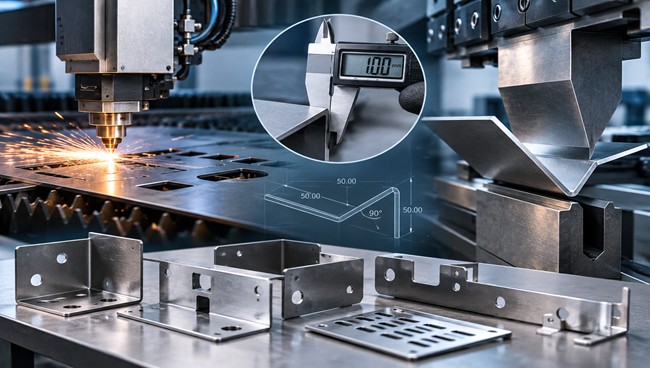
It refers to bending flat metal sheets into desired angles. The material is clamped, and a folding beam forms the angle, creating a distinct shape. Unlike press brakes, the sheet remains stationary, reducing handling and improving accuracy.
The results achieved by a metal folding machine depend on its components, which ensure the metal sheet is folded with minimal manual intervention, unlike conventional folding.
A sheet metal folding machine includes the following components:
These components work together to produce repeatable, high-quality bends.
The machine positions the sheet, clamps it securely, folds it to the programmed angle, and releases the finished part. Modern machines are equipped with CNC controls that ensure precise, repeatable bends.
A folding machine can generally fold the following metals:
It is not an exhaustive list, but if you need any other metal folded, you should consult an expert.
The answer to the most important question: Do sheet metal folding machines reduce manufacturing cost? Here are the answers:
Lower Labor Costs Through Automation: Automated programming reduces manual adjustments and enables a single operator to manage multiple jobs.
Increased Production Speed: Quick setup and repeatable programs increase throughput while shortening production times.
Reduced Material Waste: Accurate positioning minimizes scrap and better uses raw materials.
Fewer Rework and Quality Issues: These machines are known for producing high-quality bends, reducing rework and rejected parts, and saving both labor and material.
Lower Tooling Expenses: The machine requires fewer specialized tools than traditional press brake operations, reducing tooling investments.
Enhanced Energy Efficiency: Modern servo-driven systems consume less energy than many conventional hydraulic machines, lowering operating costs.
Here is how sheet metal folding machines compare with other folding machines:
A hydraulic sheet bending machine uses punches and dies to form metal, while a folding machine bends the sheet using a rotating beam. Folding is ideal for large panels and finished surfaces because it reduces the need for marking and handling.
Here are the advantages of folding over press braking:
A hydraulic bending machine is preferred for thick materials that require high forming force. It is quite popular in heavy-duty industries.
The multiple benefits of sheet metal folding machines are:
It is a preferred choice in the following industries:
No metal processing technique works in isolation; it works with other methods. For example, metal laser cutting and folding work beautifully together.
Metal sheets are usually larger and require cutting before processing or folding. Laser cutting is an effective method of cutting sheets into smaller parts.
Combining cutting and folding reduces handling, improves dimensional accuracy, and speeds production.
Many production facilities integrate laser cutting and folding into a continuous workflow for greater efficiency.
Here are the key factors to consider when you are choosing a sheet metal folding machine:
Choose a machine with CNC controls, automatic back gauges, energy-efficient drives, and dependable service support.
The future of sheet metal folding includes AI-assisted programming, robotic automation, smart manufacturing, predictive maintenance, and Industry 4.0 connectivity. These technologies improve productivity while reducing downtime and operating costs.
A sheet metal folding machine is an effective tool for reducing manufacturing costs, but another important question is whether industries should invest in one. Or should they rely on a metal processing expert?
The answer is that if you need high-quality bends and consistent results, it’s better to consult an expert such as New Mexico Metals LLC, where you get everything under one roof. You can source high-quality metals and receive metal-processing services, including sawing, shearing, cutting, punching, notching, and folding.
Whatever your metal needs are, you can consult us.
Que: What is sheet metal folding?
Ans: It is the process of bending flat metal sheets by clamping the material and using a folding beam to create precise angles.
Que: How does a sheet metal folding machine reduce manufacturing costs?
Ans: It lowers labor, tooling, and material costs while increasing production speed and reducing rework.
Que: What is the difference between a sheet metal folding machine and a hydraulic sheet bending machine?
Ans: A folding machine bends the sheet with a rotating beam, while a hydraulic sheet bending machine uses punches and dies to form the material.
Que: Can a steel folding machine handle thick materials?
Ans: Yes. Many steel folding machine models can process thick steel sheets, depending on their capacity.
Que: What are the benefits of using an aluminum folding machine?
Ans: An aluminum folding machine provides precise bends, minimizes surface damage, reduces waste, and improves productivity when working with aluminum.

To meet the needs of both wholesale and retail customers by providing an extensive selection of metals cut to size with exceptional service.
New Mexico Metals LLC
Address: 5821 Midway Park Blvd NE # F, Albuquerque, NM 87109, United States
Phone: (505) 717-1900
FAX: (505) 717-1769
Email: info@newmexico-metals.com
8:00 AM - 5:00 PM Monday - Friday
9:00 AM - 12:00 PM Saturdays
Copyright © 2026. All Rights Reserved.
Website Design & Digital Marketing By WSI