Summary
Electric metal shears are a popular choice in workshops these days because they make sheet metal cutting faster, easier, and more consistent than many manual methods. They come in different machine types, require less effort, and deliver straight, cleaner cuts. Explore the features that make them a must-have tool in workshops today.
Read the blog for details.
The key highlights of the blog are:
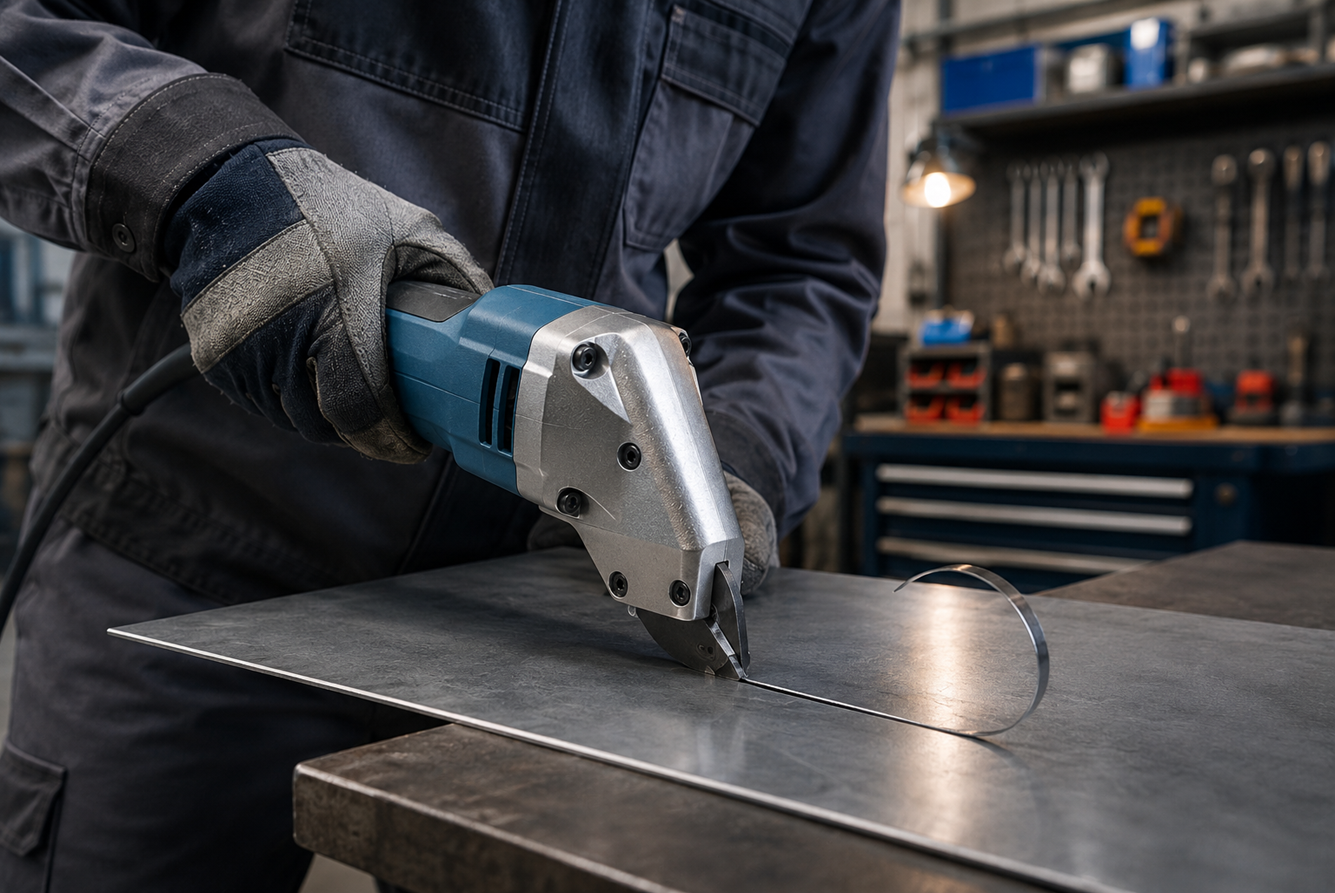
Metal cutting is physically demanding if you don’t use the right tools. Electric metal shears solve this problem by using a powered motor to drive cutting blades through sheet metal. Instead of relying on hand strength, the motor supplies the cutting force, and operators can simply guide it to get the desired results.
An electric sheet metal cutter is a versatile tool, used across various industries. Compact, cordless versions are also available, allowing for greater mobility.
This blog discusses the importance of electric metal shears in detail. Read on!
Electric shears rely on a motor to move one or more cutting blades rapidly against a fixed blade to cut through the metal sheet. The operator moves the tool along a marked line, separating the metal.
Unlike abrasive cutting tools, shears remove very little material because they do not create a conventional saw-like gap. This makes them useful when maintaining material dimensions is important.
Electric metal shears are a must-have in workshops these days. They allow repetitive cutting without causing hand fatigue and slowing production. Operators can make longer cuts with less physical effort.
They also provide better consistency when an operator needs to follow the same cutting line repeatedly. For professional workshops, it means faster processing and less fatigue during long jobs.
Cordless models allow for mobility. Operators can work without positioning an extension cord around the workpiece, as long as the battery has sufficient capacity for the job.
Here are the various benefits they offer:
Faster Cutting: Powered blades can move at high stroke rates, allowing operators to cut sheet metal considerably faster than many manual tools.
Reduced Physical Effort: Less hand and wrist strain, since the motor supplies the cutting force.
Better Maneuverability: Compact designs allow operators to follow straight lines and curved patterns, depending on the model.
Minimal Material Loss: Shearing generates less material waste than other cutting methods, making it a cost-effective option.
Consistent Results: Electric shears are known to produce clean, consistent results across multiple production runs.
Greater Versatility: Different blade configurations and tool designs allow electric shears to handle materials ranging from aluminum to mild steel and stainless steel. However, operators should always follow the specific tool’s rated capacity.
Electric metal shears don’t replace every other cutting method, but complement them. For example, they haven’t rendered manual tools obsolete. Manual tools are used for occasional light-duty work, while electric shears can handle frequent or longer cuts.
Nibblers are also used to create curved or detailed cuts, but they are used to cut smaller pieces of material. Compared to nibblers, electric shears use cutting blades that minimize material loss and speed up operations.
Also, for thicker materials, metal cutting saws and industrial shearing equipment are used.
Every powered electric shear is different. Here are some common types:
You must choose an electric metal shear based on the project needs, material thickness, cutting pattern, and job size.
They are powered tools designed to work with a compatible drill or driver. They convert the drill’s rotary motion into a shearing action, letting users cut sheet metal without buying a dedicated powered shear.
They come in handy for jobs that require portability. However, they may not provide the same ergonomics, control, or continuous-duty performance as purpose-built electric sheet metal shears.
Here are the features to look for when you are choosing an electric metal shear:
Material Thickness: What material thickness are you going to work on? Choose a shear based on that.
Motor Performance: Higher power can support demanding applications, but efficiency also matters.
Blade Quality: You need durable, replaceable blades that improve cutting performance.
Ergonomics: Choose a shear with a comfortable grip and a balanced body to reduce operator fatigue.
Cordless Capability: Battery-powered models are portable and good for small on-site jobs.
Visibility: A clear line of sight helps operators follow marked cutting paths.
Safety Controls: Lock-off switches and secure grips can help prevent unintended operation.
Choose a tool that aligns with your project needs.
Industrial jobs require heavy-duty electric metal shears to cut through thicker sheet metal. They allow professional operators to complete repetitive tasks more efficiently.
However, heavier does not automatically mean better. A large shear can be unnecessary for thin-gauge work and reduce maneuverability. The best choice is the tool that provides enough capacity without sacrificing control.
Electric metal shears are popular and a must-have in workshops because they offer speed, repeatability, and simpler operation. However, for heavy-duty industrial shearing, it’s crucial to partner with a professional service provider with the capability to handle industrial jobs and guarantee timely delivery.
Thus, you need New Mexico Metals LLC, your trusted partner for comprehensive metal-related services. We offer top-quality metals and services, including punching, notching, shearing, sawing, drilling, etc. Whether you have retail or wholesale needs, we are here for you.
Visit us today!
Que: What are electric metal shears used for?
Ans: Electric metal shears are used to cut sheet metal quickly with motor-driven blades. They are commonly used for HVAC work, roofing, ductwork, electrical enclosures, maintenance, and general metalworking.
Que: How do electric sheet metal shears differ from manual shears?
Ans: Manual shears depend on the operator’s physical force, while electric sheet metal shears use a motor to drive the blades. This reduces physical effort and significantly improves productivity during repetitive cutting.
Que: Can electric metal shears cut stainless steel and aluminum?
Ans: Yes, many models can cut both stainless steel and aluminum, but their capacities vary. A tool may have different maximum thickness ratings for each material, so always check the manufacturer’s specifications before cutting.
Que: What thickness of metal can a heavy-duty electric metal shears tool cut?
Ans: Material thicknesses differ, and so do the metal shearing tools. Every project requires assessment of the job size, material thickness, and timeline before choosing a shear.
Que: Are electric drill shears suitable for professional fabrication work?
Ans: Electric drill shears are suitable for certain professional cutting tasks, particularly light-duty or occasional work. For continuous production or demanding applications, a dedicated electric shear is generally more appropriate because it is specifically engineered for repeated metal cutting.

To meet the needs of both wholesale and retail customers by providing an extensive selection of metals cut to size with exceptional service.
New Mexico Metals LLC
Address: 5821 Midway Park Blvd NE # F, Albuquerque, NM 87109, United States
Phone: (505) 717-1900
FAX: (505) 717-1769
Email: info@newmexico-metals.com
8:00 AM - 5:00 PM Monday - Friday
9:00 AM - 12:00 PM Saturdays
Copyright © 2026. All Rights Reserved.
Website Design & Digital Marketing By WSI