Modern sheet metal cutting and bending technologies are known to improve accuracy, but how accurate are they? What makes them so accurate, and what role do professionals play in achieving this accuracy? When you are looking for metal bending services near me, you should also consider cutting accuracy and capabilities. Accuracy depends upon multiple factors, including equipment choice, bend radius, tooling, etc.
Check out this blog to learn how modern tools achieve accuracy and what contributes to it.
The key highlights of the blog are:
When you need metal cutting and bending services, you might wonder how accurate they are, how professionals achieve that accuracy, and whether they can meet your custom needs.
Modern sheet metal cutting and bending are popular for the accuracy they offer, but what tools make it possible today? What are the technologies behind them? How do they offer varying degrees of accuracy for different projects?
This blog discusses the accuracy of modern sheet metal cutting and bending in detail and provides answers to the questions stated here.
Several factors impact accuracy, which are discussed here:
Modern equipment uses controlled positioning to move the workpiece or cutting tool according to programmed dimensions. It reduces manual measurement errors and improves repeatability.
Laser systems use a concentrated beam to follow a programmed cutting path, helping create intricate profiles, openings, details, and shapes.
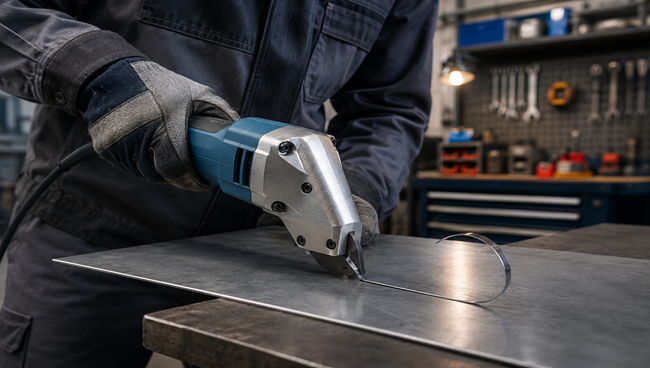
For straight-cut applications, conventional shearing remains powerful.
The material you are cutting plays a crucial role in accurate cutting. Steel, stainless steel, aluminum, copper, bronze, etc.- each of these has different strength & ductility and responds differently to the cutting tool. Material thickness also matters.
Every cutting machine requires proper setup. Check blade condition, alignment, material positioning, tooling selection, and even cutting table position for better process control and to achieve accuracy.
Laser cutting and bending are separate processes that can complement one another.
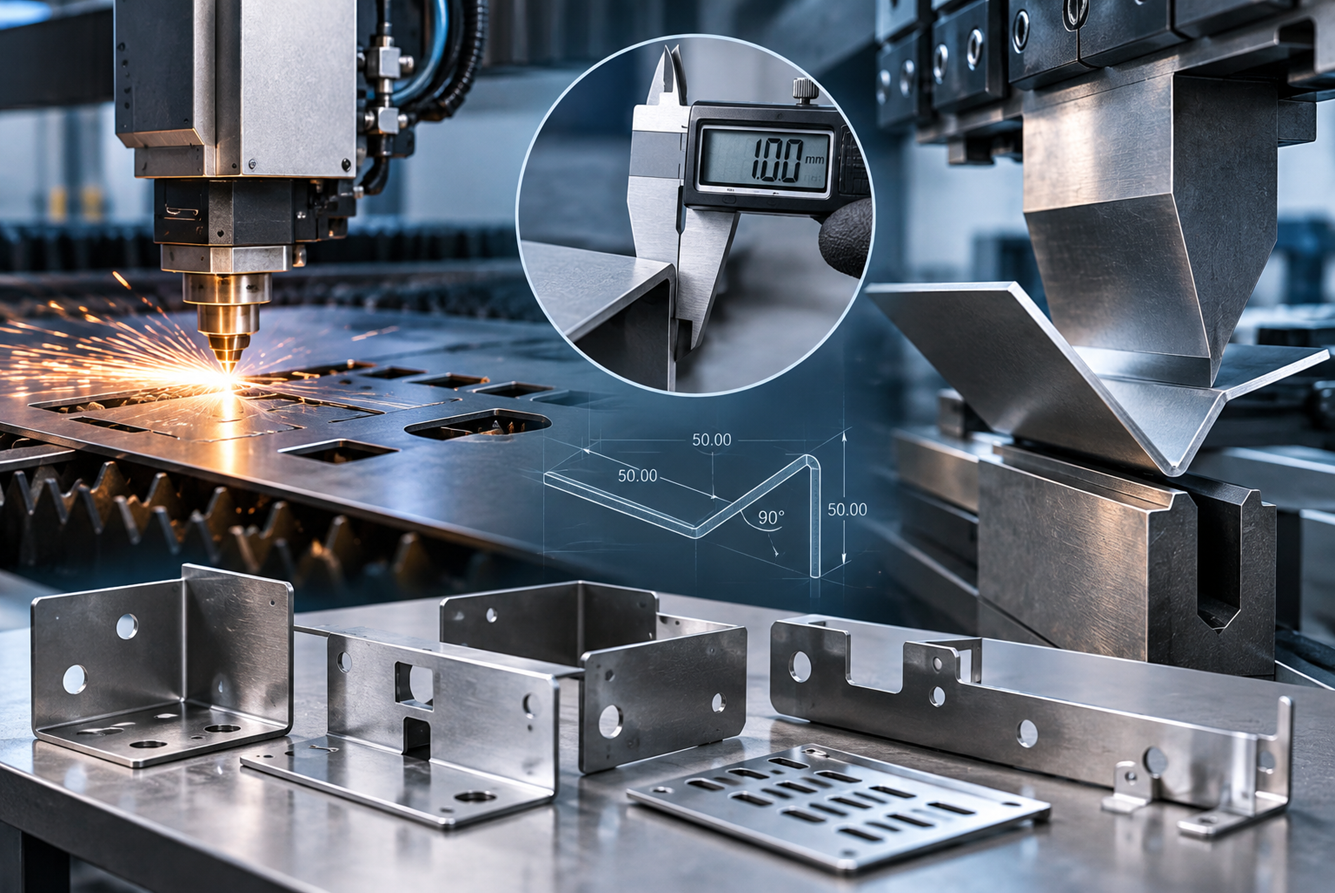
Laser cutting uses concentrated heat to create precise profiles, holes, slots, and other detailed shapes. Bending then forms the cut sheet into the required angles or three-dimensional configuration.
Modern machines can also combine one or two operations, such as cutting and bending.
However, not every project needs laser cutting. Smaller jobs that need straight cuts benefit from mechanical shearing. A metal roller bender is an appropriate choice for angular bends.
Different toolings are available for distinct cutting and bending jobs, such as:
Sheet Metal Bender: It’s used to produce controlled angles in flat sheets. Common examples include finger brakes and press brakes.
Press Brakes: They use a punch-and-die set to press sheet metal into precise shapes.
Sheet Metal Hand Brakes: Portable tools used to fold thin metal.
Roller Bender: It bends metal sheets into continuous curves, arcs, and cylindrical shapes.
Bar Benders: These tools can bend thick metal bars into desired shapes.
You can also choose aluminum benders made for specific alloys to prevent cracking, unwanted deformation, or surface marks.
When discussing accuracy and precision in metal cutting and bending, consider the material type. It significantly affects the result.
Not every metal is the same, so bending and cutting tools and processes vary by grade and thickness. Grain direction also influences bending behavior. Consider bend radius, material thickness, and strength to reduce cracking and dimensional variation.
That’s why it’s important to choose reliable metal bending services for industrial projects that require accuracy and precision. Experienced professionals understand the characteristics of different metals and use the appropriate equipment and techniques to achieve the desired results.
Professionals begin by understanding the requirements, metal type, complexity, required tolerances, and job size.
They confirm material type, thickness, dimensions, and required shape. Based on this, we select a metal cutting or bending method.
At New Mexico Metals LLC, we have two mechanical squaring shears and two finger brakes, including a Chicago mechanical brake that can bend material as thin as 24 gauge and a Baileigh magnetic brake rated for 16-gauge material over 8 feet and 22-gauge non-ferrous material.
The key to delivering quality lies not only in the machines’ capabilities but in understanding the metal, making the right adjustments, choosing the right tool, and determining the correct bend radius even for the smallest job. These are a few things that differentiate beginners from experts.
Accuracy directly impacts project efficiency.
An incorrectly cut sheet becomes unusable, while an incorrect bend might require reworking or replacement. Digital controls and precise positioning reduce such errors.
More consistent processing can result in:
For projects involving multiple identical pieces, repeatability matters most, and modern automated machines handle it easily.
When searching for a metal cutting and bending expert, look for the following:
Cost is one of the most important factors. Higher cost doesn’t always mean better quality, and lower cost isn’t always the best choice. Remember that.
Choose an expert based on their knowledge and whether it aligns with your needs.
If you are searching for metal cutting and bending experts in Albuquerque, visit us at New Mexico Metals LLC. We source the best-quality metals and provide related services, including metal cutting and bending. Our process begins with understanding your project requirements so we can choose the right metal and tools. Our knowledgeable staff is also available to help you choose the right metal grade.
Whatever help you might need, we are here for you. For accurate and precise bending services, give us a call today!
Que: How accurate is modern laser cutting and bending technology?
Ans: Laser cutting uses a laser beam to guide the blade and bend it along the programmed path, ensuring accuracy.
Que: What factors affect sheet metal cutting and bending accuracy?
Ans: Material thickness & hardness, tool choice, machine settings, metal grain, etc., most affect cutting and bending accuracy.
Que: Can a sheet metal bender handle complex designs accurately?
Ans: Modern CNC and robotic bending machines can handle complex bends accurately.
Que: What is the purpose of a metal roller bender?
Ans: It bends flat sheet metal, pipes, and tubes into arcs and cylindrical shapes.
Que: Is an aluminum bender different from standard bending equipment?
Ans: Yes, it is different because it is designed to handle aluminum, which is softer and can break easily if not handled properly.

To meet the needs of both wholesale and retail customers by providing an extensive selection of metals cut to size with exceptional service.
New Mexico Metals LLC
Address: 5821 Midway Park Blvd NE # F, Albuquerque, NM 87109, United States
Phone: (505) 717-1900
FAX: (505) 717-1769
Email: info@newmexico-metals.com
8:00 AM - 5:00 PM Monday - Friday
9:00 AM - 12:00 PM Saturdays
Copyright © 2026. All Rights Reserved.
Website Design & Digital Marketing By WSI