Summary
Laser cutting and a sheet-metal hole punch are both used to create holes. However, the choice depends upon production volume, design complexity, material type, and budget. Laser cutting is known for creating intricate designs, while punching remains the most preferred choice for high-volume production because it is faster and more cost-effective. Selecting the right method is crucial, and if you are wondering which to choose, this blog will help you.
The key highlights of the blog are:
When you think of laser cutting, you might associate it with sheet metal, but it is also used to create intricate holes and shapes. Thus, it is often difficult to choose between laser cutting and a metal hole punch. Each of these methods has its unique strengths, and you should have a deep understanding of both before you make the decision, because it will significantly impact your project.
This blog discusses the two in detail to help you make decisions more easily.
Read on!
Here is everything you need to know about metal hole punching:
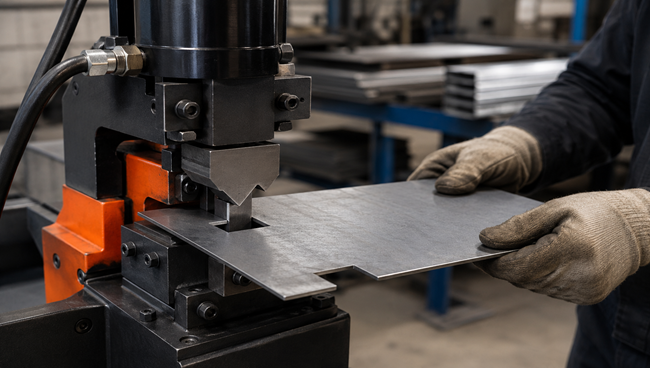
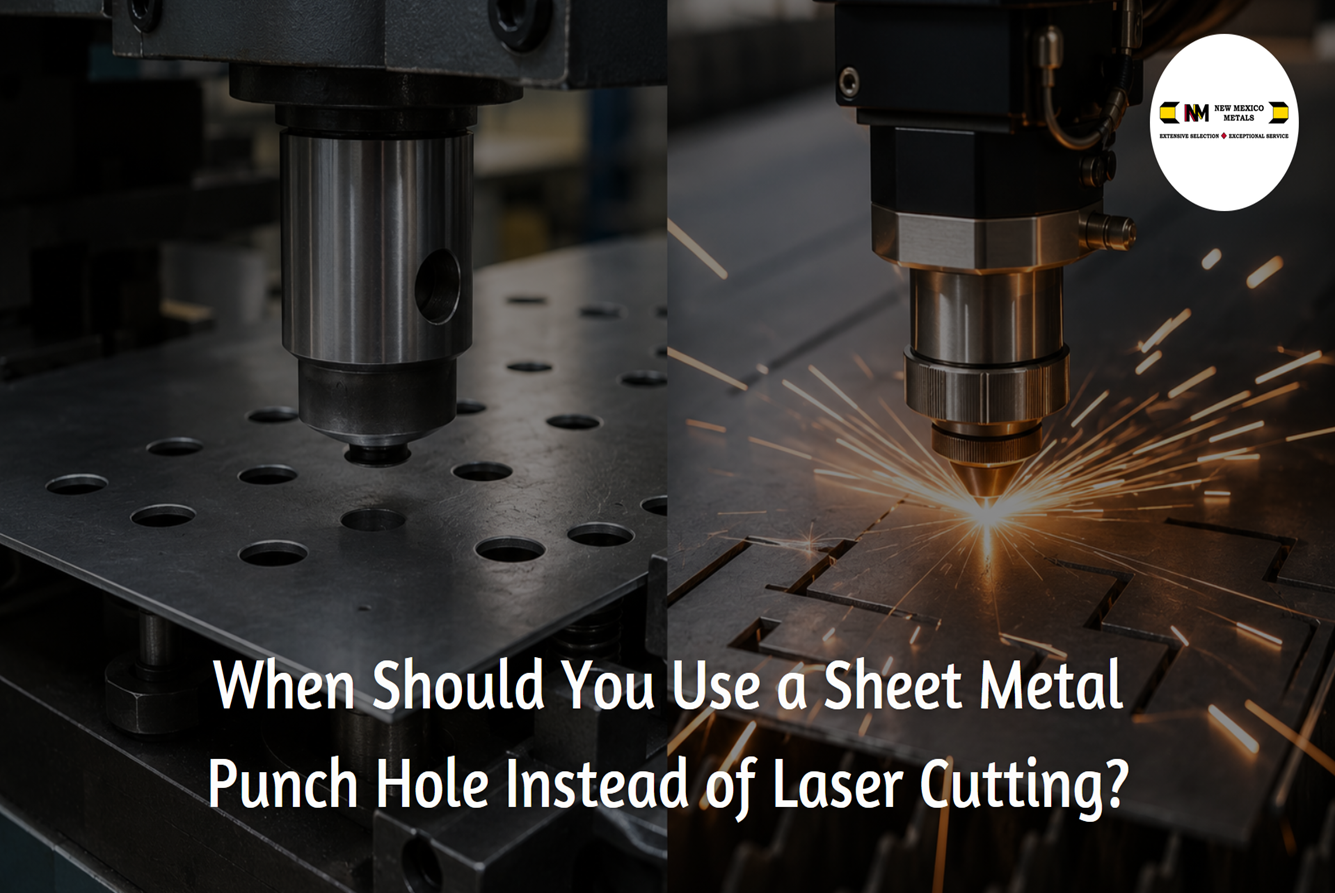
It is the process of punching a hole in sheet metal by sheer force. A punch, driven by force, shears the hole cleanly. The quality of the punching depends on the tool used.
A metal hole punch is the tool or machine that performs this operation quickly and accurately.
Some of the common punching tools include:
While both are used for punching shapes, they differ significantly. Here is how:
Laser cutting uses a concentrated laser beam to melt or vaporize metal for highly precise cuts.
Here are the instances when choosing a metal hole punch makes more sense:
High-Volume Production Runs: Punching is faster than laser cutting and better suited for high-volume production.
Simple and Repetitive Hole Patterns: Whether you are creating round, square, or slotted holes, punching can create them consistently and accurately.
Projects with Tight Manufacturing Budgets: Apart from tooling investment, punching is more affordable.
When Production Speed Is Critical: Punch presses operate much faster than laser cutting for repetitive hole patterns.
Creating Formed Features Along with Holes: Many punching systems can create louvers, embosses, and other formed features in a single operation, giving punching an edge over laser cutting.
Laser cutting is ideal in the following cases:
Complex Designs and Intricate Shapes: When working on detailed geometries, laser cutting is the right choice.
Frequent Design Changes: Even when the designs change, no special tooling is required in laser cutting.
Low-Volume Prototype Production: Laser cutting minimizes setup time for prototypes.
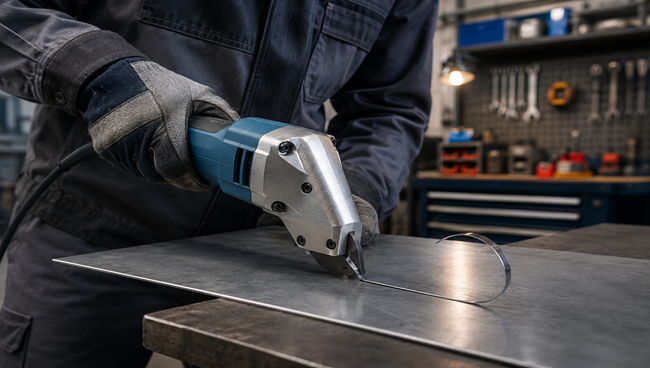
Hand-Held Metal Punch Solutions: Hand-held tools are suitable for light-duty work and field repairs. Though they require operator skill.
Industrial Metal Hole Punch Machines: These tools are designed for continuous production with excellent repeatability.
Hydraulic Metal Punching Machine Systems: These are heavy-duty machines most often used for thicker metals. They are known for their higher force, better consistency, and improved productivity.
You must consider the material’s thickness, strength, hole size, production volume, and budget before selecting a punching tool.
Here is a cost comparison between the two to make the decision easier:
Initial Equipment and Tooling Costs: Punching requires tooling changes, but laser cutting requires a higher initial investment.
Operating and Maintenance Expenses: Laser systems consume more energy, while punch tooling requires periodic maintenance.
Cost Per Part in High-Volume Manufacturing: Punching is more affordable and costs less per unit than laser cutting.
Long-Term Return on Investment: When you need higher productivity, the tooling investment cost is recovered quite easily.
Here are some expert tips to help you:
Evaluate Production Volume First: If you are working on a larger project that requires high-volume production, punching is better.
Consider Material Type and Thickness: For thicker materials, punching is better, while laser cutting works well for thinner metal sheets.
Analyze Design Complexity: For complex and intricate designs, laser cutting is the better choice. Punching is best for standard hole patterns.
Compare Total Manufacturing Costs: Consider labor, manufacturing costs, maintenance, and production time, along with initial equipment investment.
Consult a Professional Fabrication Partner: Partner with New Mexico Metals LLC to select the right punching tool or outsource the punching operation.
Both sheet metal punching and laser cutting can create holes, but the challenge is choosing the method that best fits your budget and project.
Sometimes it can be confusing to choose one, especially if you are doing it for the first time. If you need help, you can consult us at New Mexico Metals LLC. If you need high-quality results, we are here for you. We use GEKA Bendicrop 60S Universal Ironworker for our processes.
Give us a call today to learn more about our operations.
Que: What is a sheet metal punch hole?
Ans: It is a hole created by pressing a punch through sheet metal using a matching die.
Que: Is punching faster than laser cutting?
Ans: Yes, punching is generally faster for repetitive hole patterns and high-volume production.
Que: What is the difference between a metal hole punch and a laser cutter?
Ans: A metal hole punch forms holes using punches and dies, while a laser cutter removes material using a focused laser beam.
Que: When should I use a hydraulic metal punching machine?
Ans: Use a hydraulic metal punching machine when processing thicker materials, larger hole sizes, or high-production workloads requiring consistent results.
Que: Can a hand-held metal punch be used on thick metal sheets?
Ans: A hand-held metal punch is good for on-field jobs for thin to medium gauge metals. Thicker metals require a hydraulic metal punching machine or an industrial metal hole punch.

To meet the needs of both wholesale and retail customers by providing an extensive selection of metals cut to size with exceptional service.
New Mexico Metals LLC
Address: 5821 Midway Park Blvd NE # F, Albuquerque, NM 87109, United States
Phone: (505) 717-1900
FAX: (505) 717-1769
Email: info@newmexico-metals.com
8:00 AM - 5:00 PM Monday - Friday
9:00 AM - 12:00 PM Saturdays
Copyright © 2026. All Rights Reserved.
Website Design & Digital Marketing By WSI